
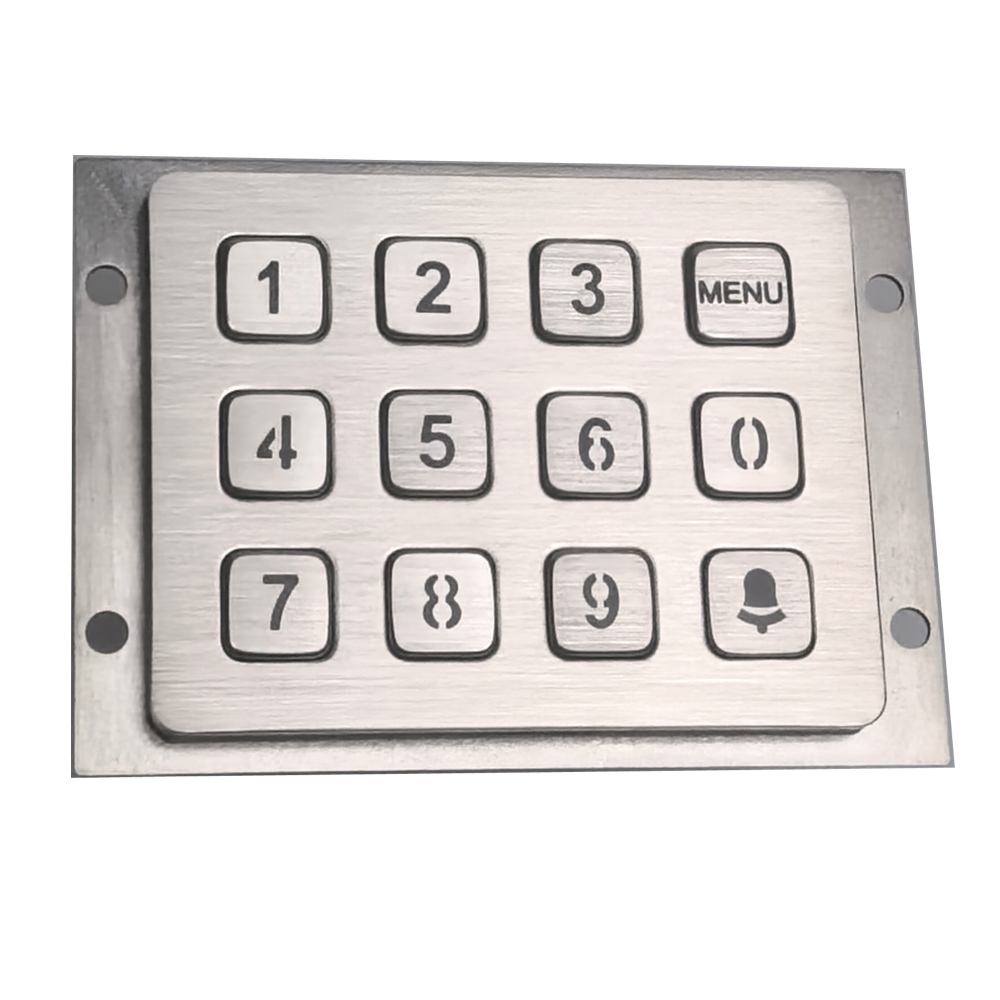
Laser engraving marks stainless steel keypads with a focused beam, creating crisp, high-contrast symbols that resist fading under heavy use. Chemical etching applies a resist coating and acid to cut deeper, more textured marks. Keypado supplies rugged metal keypads, keyboards, and telephones for access control, lockers, vending, and fuel dispensers.
What Sets Laser Engraving Apart From Chemical Etching?
Depth, speed, and process define the split between these two marking methods. Laser marking uses focused light to burn a shallow, permanent pattern into metal. Chemical etching relies on a resist coating and acid bath to cut deeper grooves into the surface. Engineers often treat laser engraving and chemical etching as interchangeable terms. The results behave differently under heavy use, and that distinction matters when specifying a keypad for a harsh-environment application.
Get a Custom Stainless Steel Keypad Quote From Keypado
Which Method Works Best for Stainless Steel Keypads?
Keypado offers engraving as an option in the core configuration of its keypads, alongside custom layouts and interface options like USB, matrix, and PS/2. That flexibility lets procurement teams. Design leads match the marking method to the operating environment before committing to a production run. Backlighting and mounting choices layer on top of the engraving decision, so specifying one affects the others.
Does Engraving Choice Affect Long-Term Durability?
Yes — mark depth influences how long legends stay readable under repeated hand contact, weather exposure, or vandalism attempts. Deeper marks resist wear longer in high-traffic kiosks and access panels. For custom stainless steel keypads deployed outdoors or in medical settings, that durability question shapes which process an OEM should request during CAD review. The wrong choice shortens field life and increases replacement costs down the line.
How Does Chemical Etching Mark Stainless Steel Keypads?
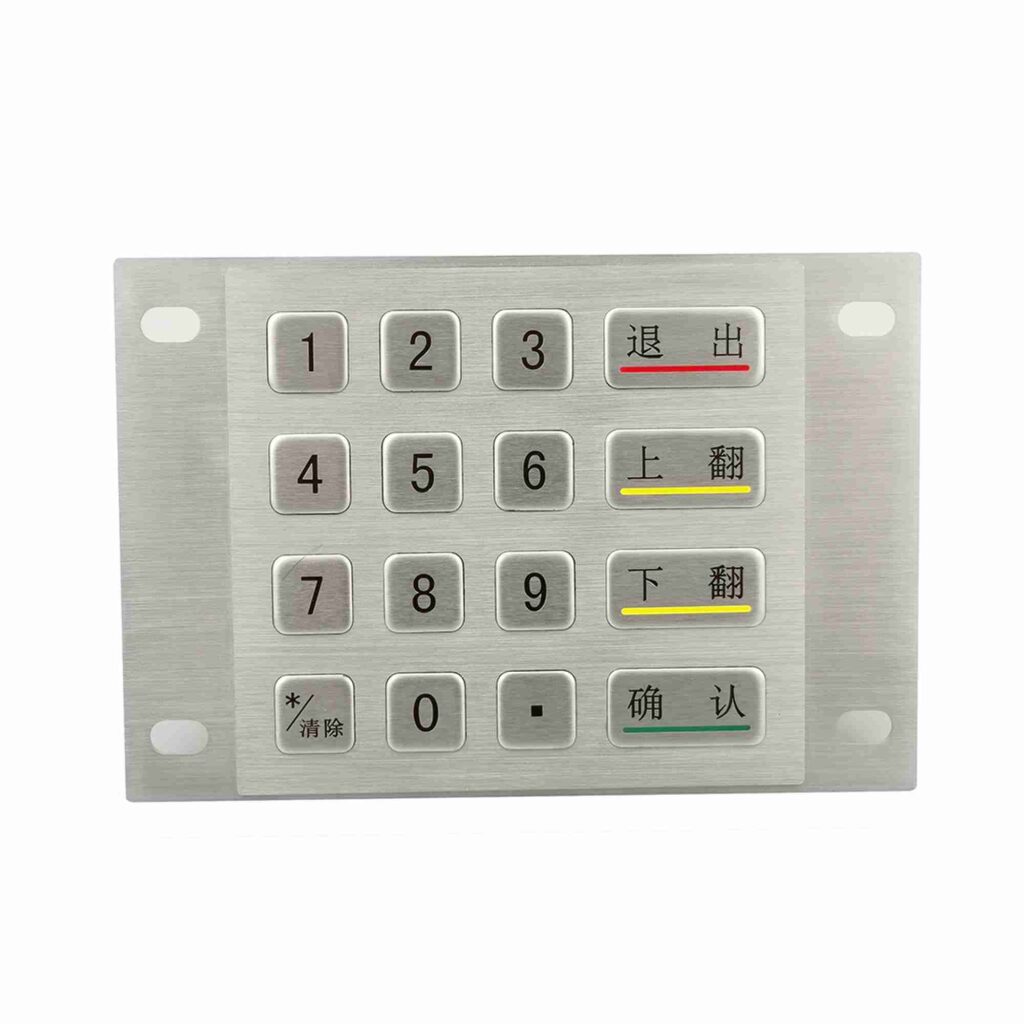
Chemical etching marks metal surfaces by dissolving exposed material with acid, leaving a permanent recessed design behind. Manufacturers have relied on this technique for decades to create durable legends on custom stainless steel keypads used in access control panels, kiosks, and industrial control systems.
The process starts with a protective resist coating applied to every area that should remain untouched. Once the resist sets, the metal sheet goes into an acid bath. Exposed sections dissolve away. The coated areas stay intact, producing crisp, recessed characters that won’t rub off under heavy field use.
Get a Custom Stainless Steel Keypad Quote From Keypado
What Chemicals Are Used in the Etching Process?
Ferric chloride and nitric acid are the two solutions most commonly used to eat away exposed stainless steel. Both dissolve metal precisely along the resist boundary, which keeps edges clean even on small keypad legends. Fabricators sometimes rely on the same acids to inspect defective molds, since the etching reveals fine surface detail.
Why Do OEM Buyers Consider Chemical Etching Cost-Effective?
Sheet preparation allows multiple keypad layouts to be etched from a single metal sheet at once. That batching lowers per-unit tooling costs compared to processes that mark one part at a time. For procurement managers weighing pilot-run budgets against long-term unit pricing, that efficiency matters.
Key advantages of chemical etching for keypad production include:
- Deep, permanent marks that resist wear from repeated key presses
- Multiple designs etched simultaneously on one sheet, cutting setup costs
- Consistent results across large production batches
Regardless of which marking method finishes the legend, Keypado builds keypad housings with vandal-proof, IP-rated metal construction, so durability doesn’t depend on the etching process alone.
How Does Laser Engraving Mark Stainless Steel Keypads?
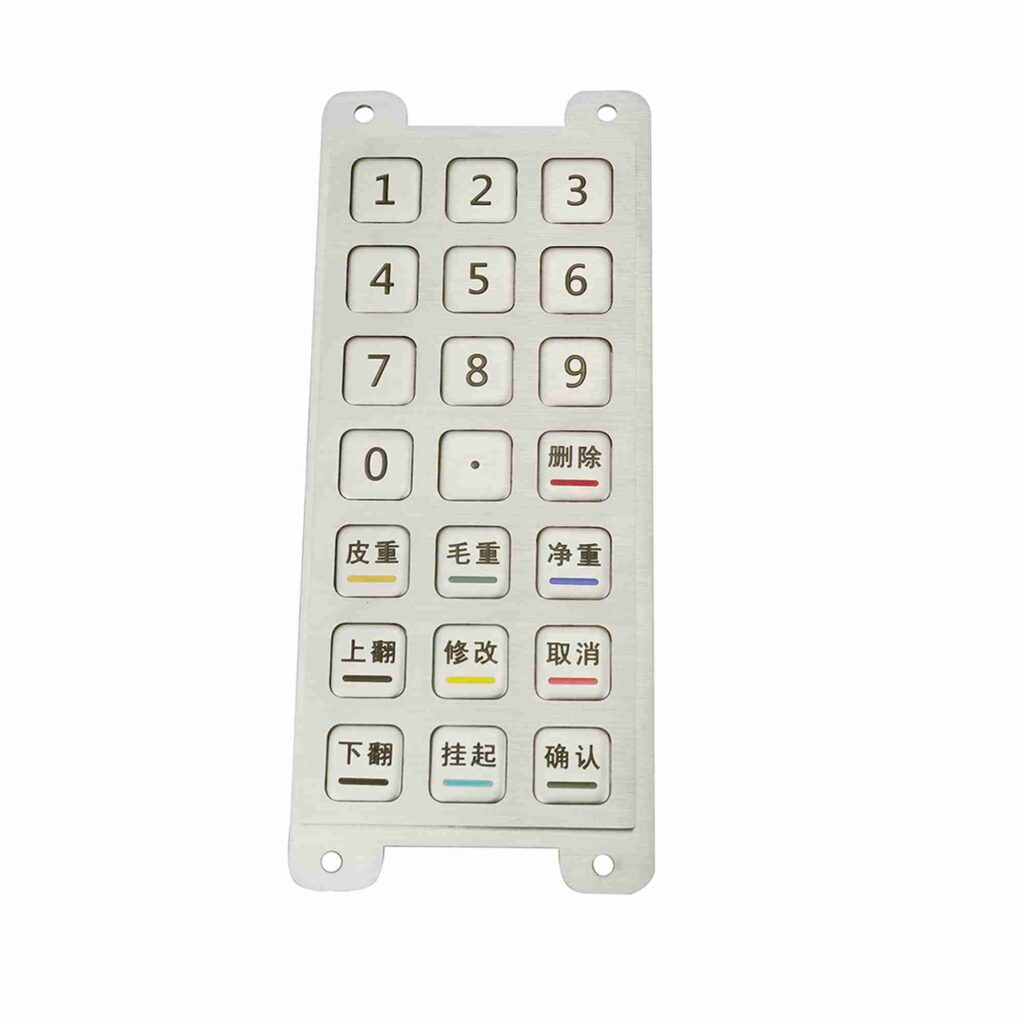
Focused laser light heats the surface of a keypad instead of cutting into it, causing oxidation that produces a permanent, high-contrast mark. Heat, not material removal, drives the change; the surface color shifts while the underlying steel stays structurally intact. That’s a critical distinction for OEM engineers weighing laser engraving vs. chemical etching on parts that need to survive years of outdoor exposure or repeated cleaning cycles.
This process works across metals, plastics, and coated surfaces, which explains why manufacturers rely on it for mixed-material assemblies without switching techniques between components. On custom stainless steel keypads, that consistency matters: a single laser setup can mark both the metal faceplate and any polymer overlay legends without compromising sharpness or depth uniformity.
Why does Keypado use laser marking for custom keypad layouts?
Keypado engraves custom 3×4 and 4×4 keypad layouts to match each OEM’s panel cutout, relying on laser marking to produce crisp legends that resist wear over time. Numbers, icons, and function labels stay legible because the mark sits fused into the surface rather than printed on top.
Do laser-marked keypads hold up in harsh environments?
Vandal-proof metal keys engraved this way are rated to survive millions of presses without the legend fading or wearing off, a must for access control panels and kiosks exposed to constant public use. Sealing to IP65 or higher keeps dust and water out, protecting both the mechanism and the marking underneath.
Which Process Survives Harsh Industrial Environments Longer?
Neither marking method determines a keypad’s lifespan on its own; the metal underneath does the heavy lifting. Keypado’s rugged metal construction targets long-term durability under harsh conditions, regardless of whether a part carries a laser mark or a chemical etch. The debate between laser engraving vs. chemical etching matters most for legibility and depth, not raw structural toughness.
Get a Custom Stainless Steel Keypad Quote From Keypado
Does the marking method affect keypad lifespan?
Marking depth influences how long characters stay readable. The base metal also plays a crucial role in resistance to impact, moisture, and vandalism. Stainless steel resists corrosion and abuse in ways that no surface treatment alone can replicate. Procurement teams comparing samples should weigh substrate grade first, then marking method.
Which industries demand the toughest keypad builds?
Keypado keypads serve access control systems, lockers, vending machines, fuel dispensers, ticketing terminals, kiosks, and industrial control panels. Each of these environments exposes equipment to heavy use and environmental extremes—outdoor temperature swings, constant handling, and attempted tampering.
Hard metals cost more to engrave and take longer to finish, which is why etching often gets recommended for custom stainless steel keypads built to survive high-abrasion settings. Whichever process a design calls for, Keypado backs every batch with ISO9001 certification and inspection reporting. That quality layer gives OEM engineers a consistent, verifiable standard across long production runs, not just a one-time sample check.
Which Marking Method Wins For Your OEM Keypads?
Production volume decides the winner more often than aesthetics do. Small pilot batches lean toward engraving, while high-volume OEM runs typically favor etching for cost efficiency. Neither method is universally “better”. The right call depends on order size, budget, and how the finished keypad will hold up in the field. That’s exactly why factory-direct engineering support matters: Keypado offers free CAD review and customization with no intermediary markups, helping engineering teams match the marking process to their actual spec instead of guessing.
Custom stainless steel keypads built for kiosks, marine equipment, or medical devices face different wear patterns, so testing before committing to volume makes sense.
Is engraving or etching cheaper for small OEM orders?
Engraving tends to win on cost when order counts stay low, since setup overhead spreads across fewer units. Etching becomes the more economical route once volume climbs, because per-unit tooling costs drop sharply at scale.
How can OEMs test both methods before a full production run?
Pilot runs come with low minimum order quantities, quick sampling, and short lead times, giving engineering teams room to compare laser engraving vs. chemical etching samples side by side before locking in volume. Fast sampling and on-time delivery keep prototype timelines tight, which matters when a product launch date is already set. Keypado manufactures its rugged metal keypads out of its Yuyao, Zhejiang facility, supporting that sampling-to-production pipeline from a single source.
Veelgestelde vragen
What is the main difference between laser engraving and chemical etching?
Laser engraving burns a shallow, permanent mark into stainless steel using focused light. Chemical etching applies a resist coating and acid bath to cut deeper, more textured legends into the metal. Both produce permanent marks, but the depth and process behind each one affects wear resistance, turnaround time, and cost on a production run.
Which method holds up better outdoors or in high-traffic installations?
Chemical etching cuts deeper into the metal, so its recessed legends tend to resist wear longer under constant hand contact and weather exposure. Laser-engraved marks are heat-fused into the surface rather than printed on top, and Keypado pairs them with IP65+ sealing and vandal-proof housings, so either method can hold up outdoors when it’s matched to the right build.
Which process costs less for OEM production runs?
It depends on volume. Laser engraving tends to be the more cost-effective choice for small pilot batches, since there’s little setup overhead. Chemical etching becomes the better value at scale, because multiple keypad layouts can be etched from a single metal sheet at once, which lowers per-unit tooling costs on high-volume orders.
 English
  Deutsch
  Français
  Polski
  Português do Brasil
  Español
  日本語
日本語  Русский
  العربية
  Italiano
  Nederlands
  Türkçe
  한국어
한국어