
Industrial metal keypads from Keypado integrate system-level ESD and surge protection directly into the rugged metal housing. This design shields sensitive electronics from electrostatic discharge and voltage spikes common in industrial environments. The metal construction provides a natural grounding path, reducing the risk of catastrophic damage during high-energy events.
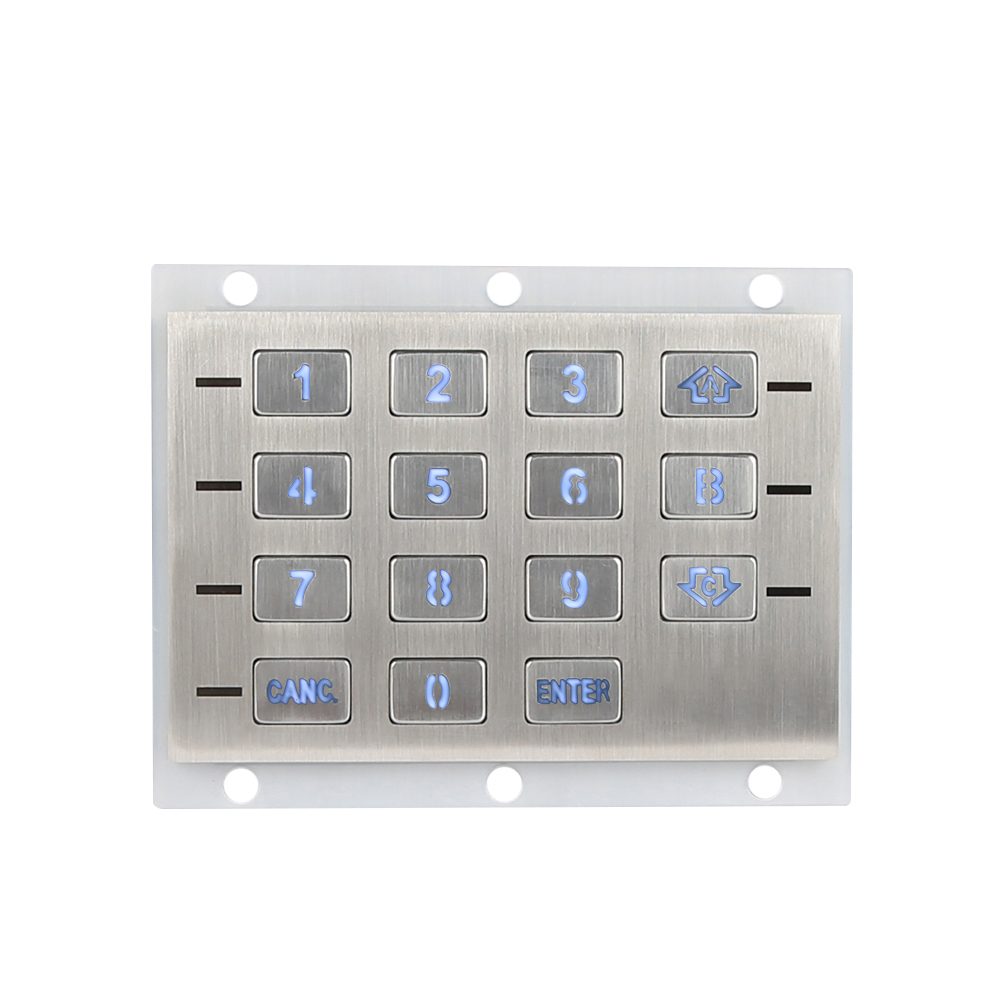
Fordern Sie bei Keypado ein individuelles Angebot für ein industrielles Metall-Tastenfeld an
Why do metal keypads fail from ESD?
Electrostatic discharge destroys metal keypad electronics through rapid, invisible voltage spikes. A single ESD event transfers thousands of volts in nanoseconds, overwhelming unprotected circuits and causing immediate or latent failure. The ESD Association defines this phenomenon as the rapid, spontaneous transfer of electrostatic charge induced by a high electrostatic field. Without proper industrial metal keypad protection, OEM equipment suffers unexplained malfunctions, costly field returns, and degraded metal keypad interface reliability over time.
The threat operates at two distinct levels. Integrated circuits carry device-level ESD safeguards, yet those safeguards prove insufficient against system-level events. Texas Instruments’ System-Level ESD Protection Guide confirms that while many ICs have device-level ESD protection, ICs remain at risk of damage from system-level ESD events. Additional protection components become necessary to guard against these higher-power transients.
Panasonic’s technical documentation describes surge and ESD as transient high voltage, and possibly very dangerous noise under certain conditions. When the voltage level reaches a critical threshold, malfunctions occur. A keypad exposed to repeated discharges develops intermittent key registration, ghost presses, or complete interface lockup. These failures cascade into equipment downtime that no OEM can afford.
Keypado addresses this vulnerability at the physical layer. The company specializes in the design and manufacture of rugged metal industrial input and communication devices tailored for original equipment manufacturers (OEMs). That hardened enclosure forms the first line of defense in harsh environments, shielding internal electronics from direct discharge paths.
How does system-level ESD differ from device-level protection?
Device-level protection handles small internal transients during manufacturing and handling. System-level ESD strikes the finished product during real-world operation. A user touching a metal keypad in a dry environment generates a discharge that bypasses chip-level safeguards entirely. System-level events demand external suppression components rated for higher energy absorption.
What symptoms indicate ESD damage in a metal keypad?
Early warning signs include keys that require multiple presses to register or characters that appear without physical contact. Advanced damage produces complete interface failure. Latent ESD damage proves especially dangerous because the keypad passes factory testing but fails weeks later in the field. Batch inspection reports and ISO-certified quality control catch these vulnerabilities before deployment.
What protection belongs on the keypad PCB?
A keypad PCB needs a layered defense against transient threats. Electrostatic discharge causes electrical over stress (EOS) failures on integrated circuits. Without proper protection, a single spark destroys the controller chip.
Engineers must match the protection topology to the chosen interface. Keypado offers vandal-resistant, IP-rated input devices with flexible layouts, interfaces (USB, matrix, PS/2), engraving, backlighting, and mounting options. Each interface presents different vulnerability points. A matrix scan design exposes row and column traces directly to the outside world. USB lines carry high-speed differential signals that demand low-capacitance clamping.
The physical enclosure plays a supporting role. Contamination on a PCB surface lowers the effective breakdown voltage of protection components. Moisture creates unintended discharge paths. A clean, sealed board keeps the protection devices operating at their rated thresholds.
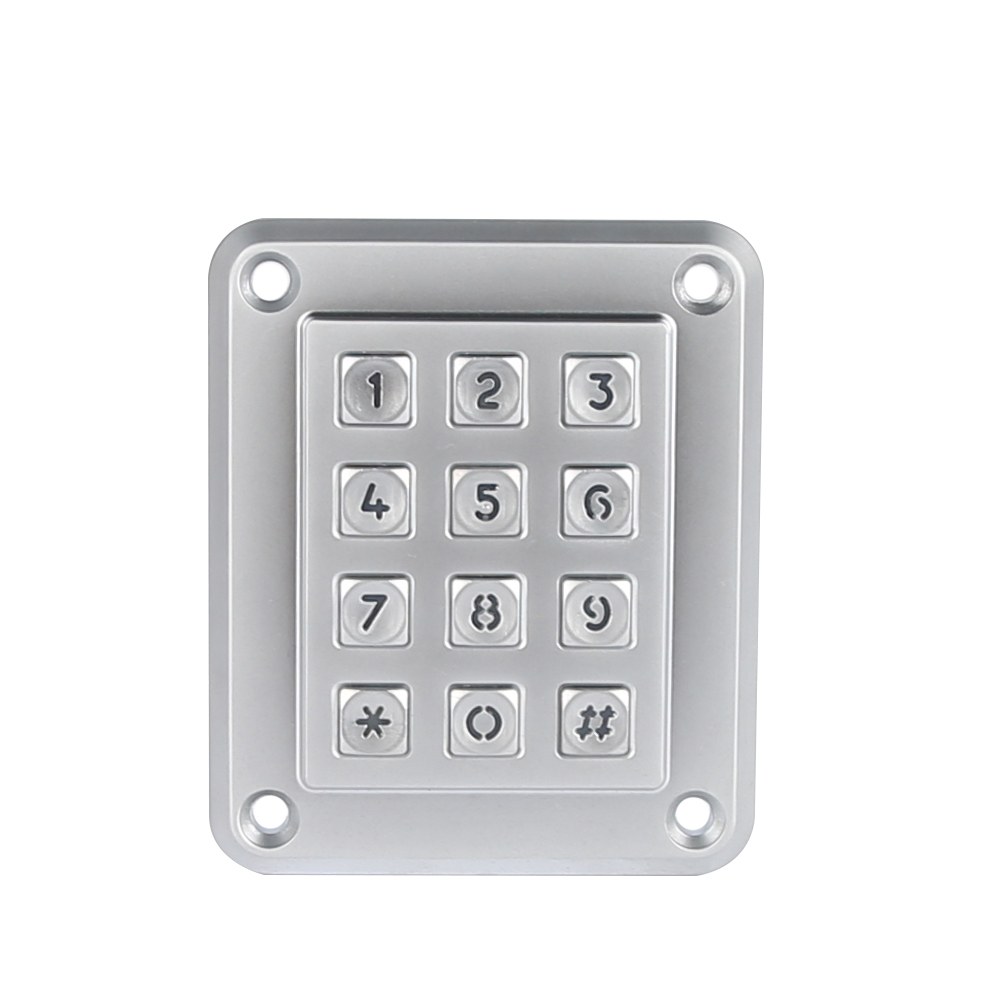
Fordern Sie bei Keypado ein individuelles Angebot für ein industrielles Metall-Tastenfeld an
What devices guard against system-level ESD events?
System-level ESD protection requires dedicated ESD and surge devices. Texas Instruments notes in its System-Level ESD Protection Guide that these components guard against higher power transient events that on-chip IC protection cannot handle. TVS diodes shunt current away from sensitive pins. Series resistors limit inrush. Capacitors absorb charge before it reaches the microcontroller.
How does interface choice change the protection design?
The interface dictates the protection component selection. A PS/2 connection runs at lower speeds and tolerates higher clamping voltages. USB 2.0 demands sub-picofarad capacitance to preserve signal integrity. Matrix keypads need protection on every row and column line. Keypado specializes in the design and manufacture of rugged metal industrial input and communication devices tailored for original equipment manufacturers (OEMs). The layout places these devices as close as possible to the connector entry point. Trace length between the transient source and the clamp determines how much energy reaches the IC. Short traces save chips.
How do you ground the metal housing?
Grounding the metal housing creates a low-impedance path that shunts electrostatic discharge away from sensitive internal circuits. A proper chassis bond prevents transient energy from reaching the PCB where it causes latch-up or permanent silicon damage.
The conductive housing itself becomes the first line of defense in a system-level protection strategy. Without a deliberate ground connection, that metal body floats electrically. A floating chassis accumulates charge until the potential difference arcs across an air gap inside the enclosure. Panasonic’s 2017 guide on surge and ESD protection components notes that a surge or ESD event causes malfunctions when the level reaches a certain degree, often exposing circuits to voltages far exceeding their permissible range. A poor ground path lowers that threshold dramatically.
What makes a grounding connection reliable over millions of cycles?
Mechanical durability matters as much as electrical conductivity. Vandal-proof metal keys last millions of presses. The grounding connection must survive the same repeated stress without loosening or corroding. Engineers achieve this by using star washers under a dedicated chassis lug. The washer bites through surface oxidation and maintains gas-tight contact. A solder tab alone risks fracturing under vibration.
How does custom mounting reduce ground loop impedance?
Custom mounting options let designers place the bond point where impedance stays lowest. Keypado supports custom 3×4 and 4×4 layouts that fit specific panel geometries. Positioning the ground lug close to the keypad’s metal frame shortens the return path. Shorter paths mean less inductance. Less inductance means faster rise-time clamping when a discharge strikes.
Industrial metal keypad protection depends on this bond. Metal keypad interface reliability follows directly from it. A secure, low-impedance ground keeps transient currents out of the data lines. The result is consistent keypress detection and zero field failures traced to ESD.
Which components clamp surge transients best?
Selecting the right protection component depends on the transient’s energy and speed. Engineers choose between three device families: ZNR surge absorbers, chip varistors, and ESD suppressors. Each handles a different part of the threat spectrum. Reliable industrial metal keypad protection hinges on matching the component to the exact surge profile the keypad faces in the field.

Fordern Sie bei Keypado ein individuelles Angebot für ein industrielles Metall-Tastenfeld an
What is the difference between a surge absorber and an ESD suppressor?
ZNR surge absorbers tackle high-energy events. Panasonic’s documentation on surge and ESD basics describes these devices absorbing large transients that would destroy sensitive electronics. They respond more slowly than suppressors do. ESD suppressors, by contrast, react in nanoseconds. They clamp the fast, low-energy electrostatic zap from a user’s fingertip before it reaches the microcontroller. Chip varistors sit in the middle, handling moderate surges while providing a compact footprint. For metal keypad interface reliability, the protection network must not smother the signal. Infineon’s design guidance notes that modern protection devices deliver better clamping with lower capacitance across a wide range of operating voltages, a critical trait for high-speed matrix scanning.
How does capacitance affect metal keypad signal integrity?
Excessive capacitance distorts the scanning pulses that poll each row and column. Keypado’s keypads provide USB or matrix output for straightforward controller integration. The protection network’s capacitance adds directly to the trace load. An ESD suppressor with ultra-low capacitance preserves clean edges on the scanned return signal. Engineers who ignore this parameter lose keypresses during fast typing or detect phantom presses in humid conditions. Reviewing a protection schematic takes expertise. Keypado’s factory-direct engineering team, located in Yuyao, Zhejiang, China, can assess component placement and recommend suppressors that balance clamping voltage against capacitive load.
What mistakes break interface reliability?
Interface reliability fails when protection design ignores real-world electrical stress. Keypado’s products are proven in 100k+ unit deployments, which means field failure patterns are well understood and avoidable with proper design. Engineers who skip validation before production commit to costly rework later.
Industrial metal keypad protection demands attention to four specific failure modes. Electrical over stress (EOS) causes silicon melting, oxide punch-through, junction damage, and metallization damage. Each failure mode degrades long-term reliability of the electronic system. These are not theoretical risks. They appear in deployed equipment when protection topology falls short.
What happens when protection components are specified without batch verification?
Keypado’s ISO-certified quality control and batch testing help ensure that the protection components specified are consistently assembled and verified. Without this verification, a design passes lab testing but fails in the field. Batch inspection reports catch assembly drift before units ship.
How do engineers validate protection topology before full production?
Fast sampling with a 7-day turnaround lets engineers validate protection topology before committing to full production. A Prototyp eines Metalltastenfelds exposes layout and durability issues early. Low MOQ samples keep validation costs manageable.
Metal keypad interface reliability also suffers from skipped environmental testing. Vandal-resistant, IP-rated construction matters when equipment faces moisture, dust, and physical abuse. Keypado’s metal construction addresses these stresses directly. The result is a protection scheme that survives millions of presses without degradation.
Häufig gestellte Fragen
Why do industrial metal keypads fail from ESD?
A single ESD event transfers thousands of volts in nanoseconds, overwhelming unprotected circuits. This causes immediate or latent failure, leading to intermittent key registration, ghost presses, or complete interface lockup.
What protection belongs on the keypad PCB?
A keypad PCB needs a layered defense against transient threats, including system-level ESD and surge protection. Keypado integrates this protection directly into the rugged metal housing, which provides a natural grounding path against high-energy events.
Fazit
So when you’re choosing an industrial metal keypad, the protection story doesn’t end at the component list. It lives in the grounding bond, the mounting geometry, and the validation steps you take before production. A low-impedance ground path, matched surge components, and batch-verified assembly turn a good schematic into a field-proven interface. Start with a fast prototype, test it under real stress, and lock in a design that survives millions of presses without a single ghost keypress.
 English
 Deutsch
 Français
 Polski
 Português do Brasil
 Español
 日本語
 Русский
 العربية
 Italiano
 Nederlands
 Türkçe
 한국어