
Laser engraving on a metal keypad is a permanent marking process that etches legends, icons, or logos directly into the metal surface using focused laser beams. Keypado applies this technique across custom keypad layouts, producing high-contrast markings that resist wear, chemicals, and vandalism far longer than printed or sticker-based labeling methods.
What Happens When You Laser-Engrave a Metal Keypad?
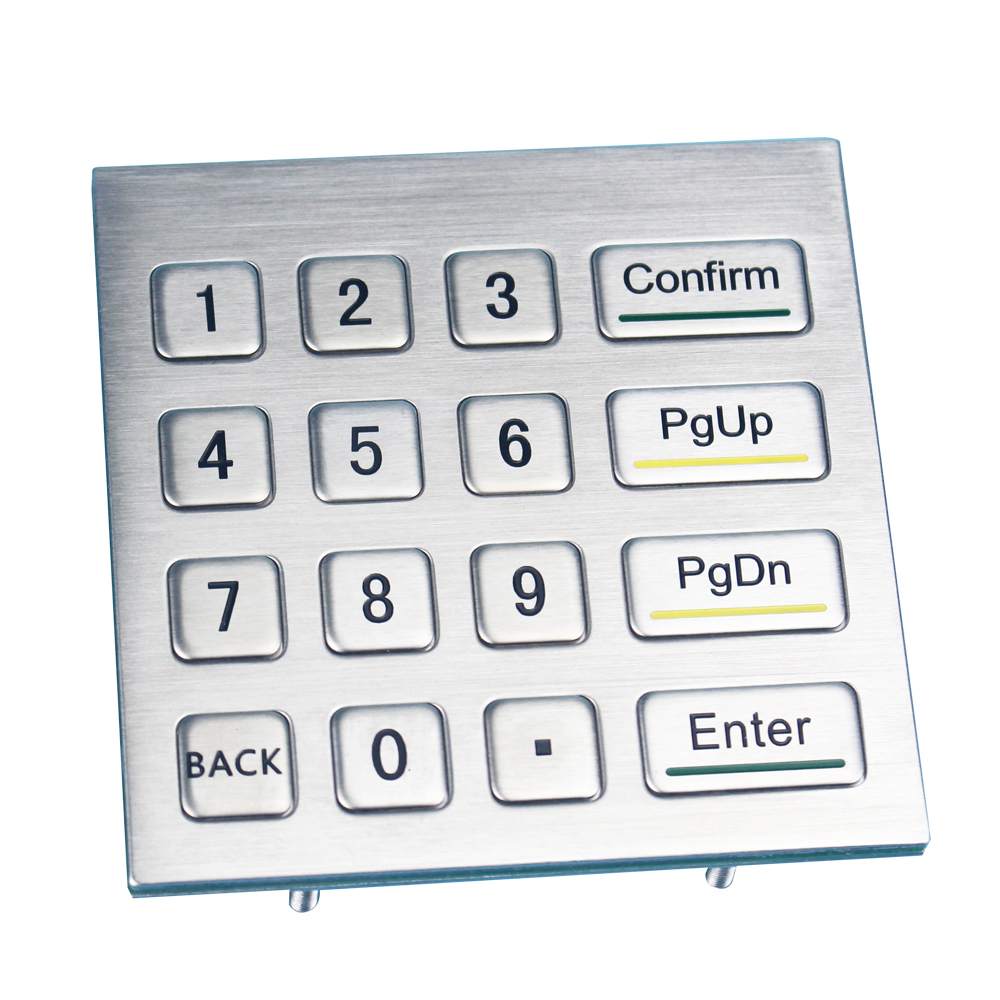
A focused beam physically removes a thin layer of metal to carve a permanent legend into the keypad surface. No ink sits on top, no sticker peels away, and no label fades after years of heavy presses. The mark becomes part of the metal itself, which is exactly why metal keypad laser engraving holds up in access control panels, lockers, vending machines, and fuel dispensers where fingers hit the same key thousands of times a day.
Get a Custom Metal Keypad Quote From Keypado
Is laser engraving the same as laser marking?
No — the two processes work differently, even though people often use the terms interchangeably. Laser marking alters the surface through color change, charring, foaming, or melting, leaving the material’s structure mostly intact. Engraving cuts material away entirely, creating a groove that stays legible even after the surface gets scratched or scrubbed.
What kind of laser produces the best results on metal keypads?
Fiber lasers running at a wavelength of 1064 nm serve as the standard equipment for keyboard and keypad engraving work. This wavelength suits metal surfaces particularly well, producing clean, high-contrast characters without excess heat spreading into surrounding material.
Keypado builds its rugged metal keypads with this exact approach in mind. Layouts, interfaces, and engraving get configured together as a single package, so the finished panel matches an OEM’s design specs from the first sample. That coordination matters for engineers who need:
Legends that survive vandalism attempts and outdoor exposure
Consistent contrast across large production batches
Markings that never require reprinting or relabeling
Compare the two surface-marking methods:
For OEM applications facing constant physical contact, engraving remains the more dependable choice.
Why Does Engraved Text Outlast Printed Labels?
Physical depth beats surface ink every time. Engraved legends cut directly into metal. There’s no coating to scrape off, no sticker edge to peel, and no printed layer to fade under years of finger contact. Printed or sticker-based keypad markings wear thin after months of heavy use. Engraved characters stay sharp for the life of the device.
The physics behind this durability comes down to process. Metal keypad laser engraving removes material to form each character instead of depositing ink or relying on a tool bit that touches the surface. No ink means nothing to wear away. No contact tooling means nothing to replace or recalibrate over time. That’s a structural advantage over marking methods that depend on consumable parts.
Does engraving actually survive heavy daily use?
Yes — Keypado’s metal keys are built for exactly that punishment. Field-tested keypads endure millions of presses without losing legibility. The engraving sits below the surface rather than on top of it. Vandalism, gloved hands, and repetitive access-control cycles don’t erase the markings.
What about dust, moisture, and outdoor exposure?
Sealed housings protect the engraving from the environment itself. Keypado keypads carry an IP65+ rating, blocking dust and water ingress that would otherwise corrode or obscure a printed legend. Combine sealed construction with recessed engraving, and characters stay readable through rain, washdowns, and desert grit alike.
That combination has already been proven at scale:
Engraved legends resist abrasion from gloves, tools, and vandalism attempts
No ink or coating layer means no fading, chipping, or peeling
IP65+ sealing shields engraved surfaces from field-condition moisture and debris
Field validation spans more than 100,000 deployed units across OEM applications
For procurement teams comparing input devices, that track record matters more than a spec sheet claim.
Which Keypad Features Can Be Laser Engraved?
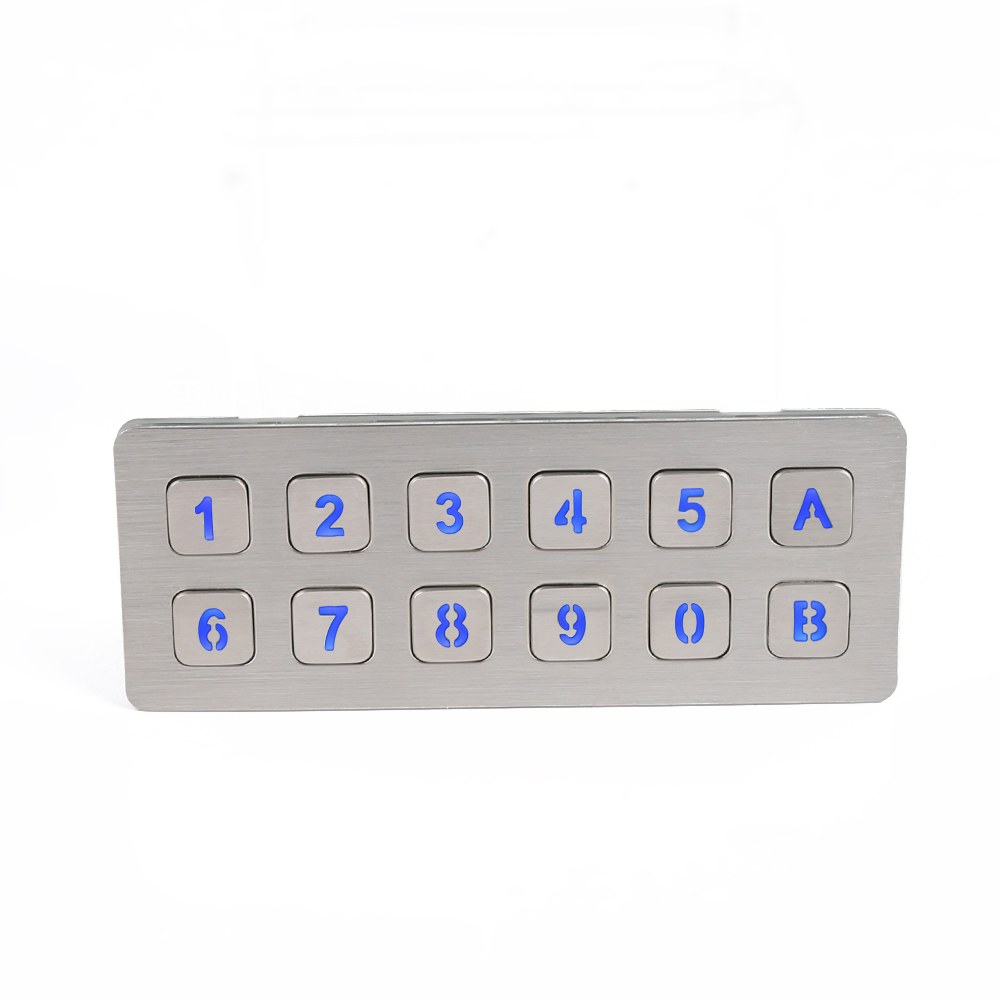
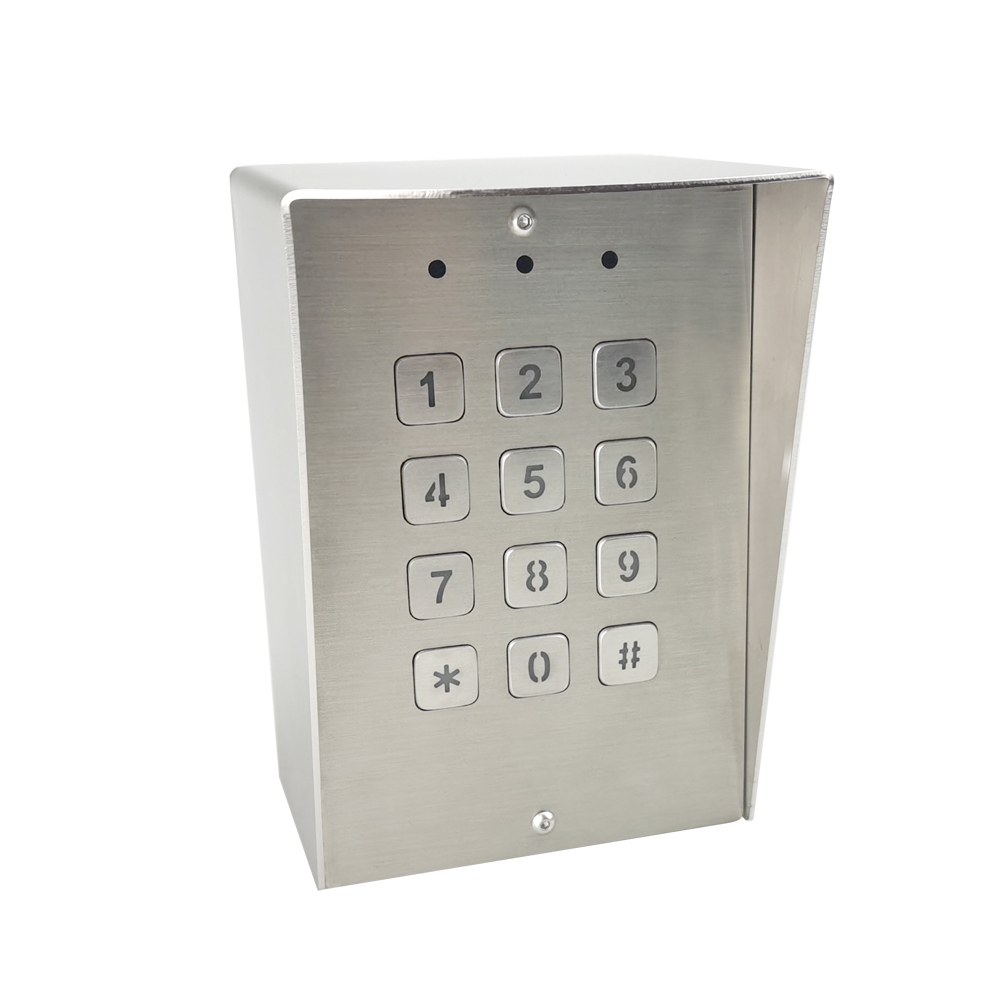
Key legends, layout grids, and panel graphics all take laser engraving well on metal keypads. Custom 3×4 or 4×4 layouts get engraved to match an OEM’s exact panel cutout. The finished part drops straight into an existing enclosure without redesign work. That precision matters for procurement teams juggling tight tolerances across multiple suppliers.
Get a Custom Metal Keypad Quote From Keypado
Metal keypad laser engraving covers more than just visible characters. Manufacturers also rely on laser marking for lot and batch codes, 2D codes, and other alphanumeric data added during production runs. These marks help track units through assembly, quality checks, and field service without adding a separate labeling step.
Can engraved keypads still connect to standard controllers?
Yes. Engraved keypads pair with USB or matrix output, which keeps controller integration straightforward for design engineers. There’s no need to rework wiring or firmware just because the legends were customized.
What else gets engraved besides key labels?
Beyond function labels, laser engraving handles serial numbers, branding marks, and traceability codes on the same panel. Industrial teams often combine these elements to save space and cut down on separate nameplates.
Across manufacturing, retail, and signage industries, laser engraving and marking serve a shared purpose: personalizing products and identifying parts reliably. For OEM procurement specialists, that translates into a few practical wins:
Custom layouts — 3×4 and 4×4 grids sized to fit the panel cutout
Interface-ready output — USB or matrix connections for easy controller pairing
Production coding — lot numbers, batch codes, and 2D codes applied during manufacturing
Cross-industry familiarity — the same marking techniques used in industrial, retail, and signage applications
Engraved characters resist wear far better than printed labels, which matters most on equipment handled thousands of times a day.
How Does Keypado Take CAD Files to Production?
A CAD file becomes a finished panel through a straightforward path: consultation, sampling, and factory-direct manufacturing. Keypado’s engineering team builds rugged metal keypad laser engraving solutions to an OEM’s exact specifications, skipping the guesswork that slows most custom hardware projects.
The process starts with a conversation, not a quote. Before any cutting begins, engineers discuss material choice. Stainless steel, zinc alloy, or another metal — alongside the production goals driving the design. That upfront dialog prevents costly rework later. Keeps the final layout aligned with how the device will actually be used in the field.
How fast can engineers get a sample?
Sample turnaround runs on a 7-day cycle, even at low minimum order quantities. This speed lets design teams validate engraving depth, contrast, and durability on an actual physical part before committing to full production runs.
Where does Keypado manufacture its input devices?
Production happens at Keypado’s own factory in Yuyao, Zhejiang, China. Operating the facility directly removes intermediary markups. Keeps engineering support connected to the production floor, rather than routed through a third-party vendor.
That direct connection between design and manufacturing shows up in the results. Consider what OEM teams typically get from the process:
Custom specification matching — panels engineered to exact CAD dimensions and interface requirements
Rapid validation — 7-day sample turnaround before full-batch commitment
Factory-direct pricing — no added markup from outside vendors
Proven scale — trusted by more than 200 clients worldwide for custom metal input hardware
For procurement specialists comparing suppliers, that combination of speed, direct manufacturing, and a track record across 200-plus clients reduces the risk of ordering an unproven design in bulk. Fewer surprises at scale means fewer delays getting equipment out the door.
What Should You Ask an Engraving Partner?
Four questions separate a reliable metal keypad laser engraving partner from a risky one: sample testing, OEM support depth, quality certification, and production timeline. Procurement teams that skip these questions risk mismatched settings, delayed launches, or inconsistent batches down the line. A few pointed questions upfront save months of rework later.
Get a Custom Metal Keypad Quote From Keypado
Does the Partner Test Physical Samples First?
Skip any vendor willing to quote full production before seeing a real part. A trustworthy shop asks for blank keycaps or panels first, running professional evaluations to nail down settings before committing to volume. That sample step catches contrast, depth, and material issues while the stakes are still low.
What Kind of Engineering Support Comes With the Order?
Strong OEM/ODM support does more than mark keys — it shortens development timelines and strengthens field reliability once units ship. Engineers should ask whether the partner reviews CAD files, flags design issues early, and adjusts layouts before tooling begins. That kind of factory-direct, engineering-led process moves projects from custom concept to production run without the delays that come from working through a middleman.
Quality control deserves its own line of questioning too. Ask specifically about:
ISO-certified quality management systems
Batch testing procedures for each production run
Documentation provided with shipped orders
Consistency matters more than a single good sample. Batch testing, backed by ISO certification, confirms that unit 10,000 engraves as cleanly as unit one. For OEMs deploying keypads across multiple product lines, that repeatability protects both budget and brand reputation.
FAQ
What is laser engraving on a metal keypad?
Laser engraving uses a focused beam to remove a thin layer of metal, carving legends, icons, or logos permanently into the surface. Keypado, based in Yuyao, Zhejiang, China, applies this technique across custom keypad layouts for high-contrast, wear-resistant markings.
Is laser engraving different from laser marking?
Yes — engraving cuts material away to create a permanent groove. Marking only changes surface color or texture without removing material. Engraved legends stay legible after scratching or scrubbing, unlike marked surfaces.
Why does laser-engraved text last longer than printed labels?
Engraved characters cut directly into metal, leaving no ink, coating, or sticker to peel or fade over time. Since the legend sits below the surface, Keypado’s engraved keypads endure millions of presses without losing legibility.
 English
  Deutsch
  Français
  Polski
  Português do Brasil
  Español
  日本語
日本語  Русский
  العربية
  Italiano
  Nederlands
  Türkçe
  한국어
한국어