
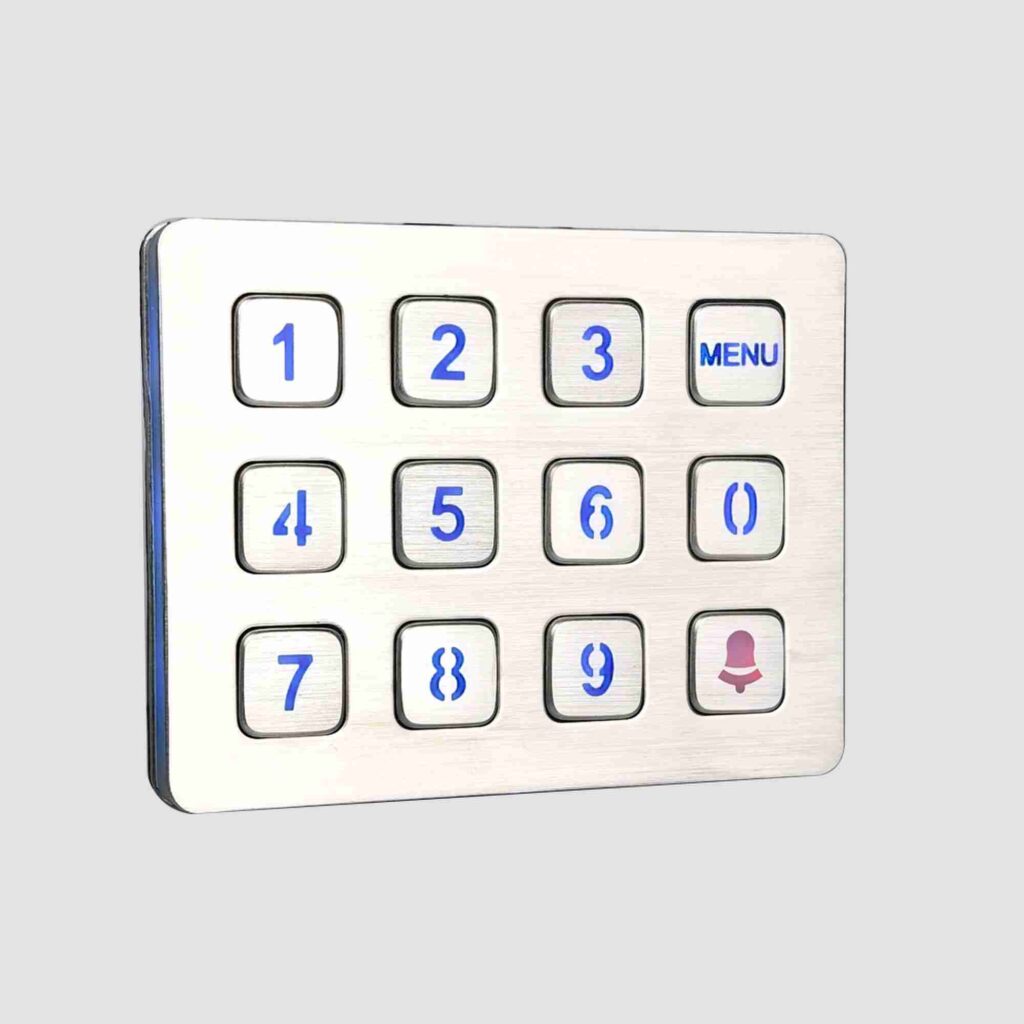
When it comes to clean laser-engraved metal keypads, laser-engraved metal keypads endure repeated chemical cleaning without losing legibility. The marking process fuses directly into the metal surface rather than sitting on top like paint or ink. Keypado builds keypads from rugged metal for IP-rated, vandal-resistant durability, proven across 100,000+ unit deployments in food processing, medical, and public self-service equipment.
Why Does Laser Engraving Weaken Bare Metal?
Digging a laser beam into raw stainless steel strips away a protective barrier that keeps the metal from rusting. That barrier is a thin film of chromium oxide, and once it’s gone, corrosion has an open door. For OEMs building equipment meant to survive years of handling, humidity, and cleaning chemicals, that’s a real reliability risk hiding under an otherwise sharp-looking mark.
Get a Custom Metal Keypad Quote From Keypado
What Is the Protective Layer That Gets Removed?
Stainless steel isn’t naturally rust-proof on its own. It earns that reputation through passivation, a chemical process where chromium in the alloy reacts with oxygen in the air. This reaction builds a microscopically thin chromium oxide film across the surface, sealing out moisture and airborne contaminants. Any process that carves or etches into that surface, including deep engraving, breaks the seal and exposes bare metal underneath.
Does That Mean All Laser Marking Damages Metal?
No. The problem isn’t lasers themselves; it’s methods that remove material. Advanced marking systems exist that produce dark, high-contrast, annealed marks without cutting into the surface or disturbing the passive layer. These non-destructive approaches deliver the same crisp, legible branding and part-numbering that engraving promises, minus the rust risk.
That distinction matters for procurement teams sourcing clean laser-engraved metal keypads for equipment that has to survive years in the field. Industries with zero tolerance for corrosion failure already lean on these methods, including:
Military and defense equipment
Electronics manufacturing
Oil and gas installations
Aerospace components
Automotive systems
If a mark shows up on stainless steel gear used in wash-down or outdoor settings, the marking process behind it deserves a second look before specs get locked in.
How Do IP Ratings Guard Engraved Keypads?
IP65+ sealing keeps dust and water out of the gaps around engraved characters, stopping contamination before it ever reaches the switch layer. That rating matters most on clean laser-engraved metal keypads, where crisp markings sit right at the surface and need protection from grime, grease, and moisture that build up on factory floors, kiosks, and outdoor terminals.
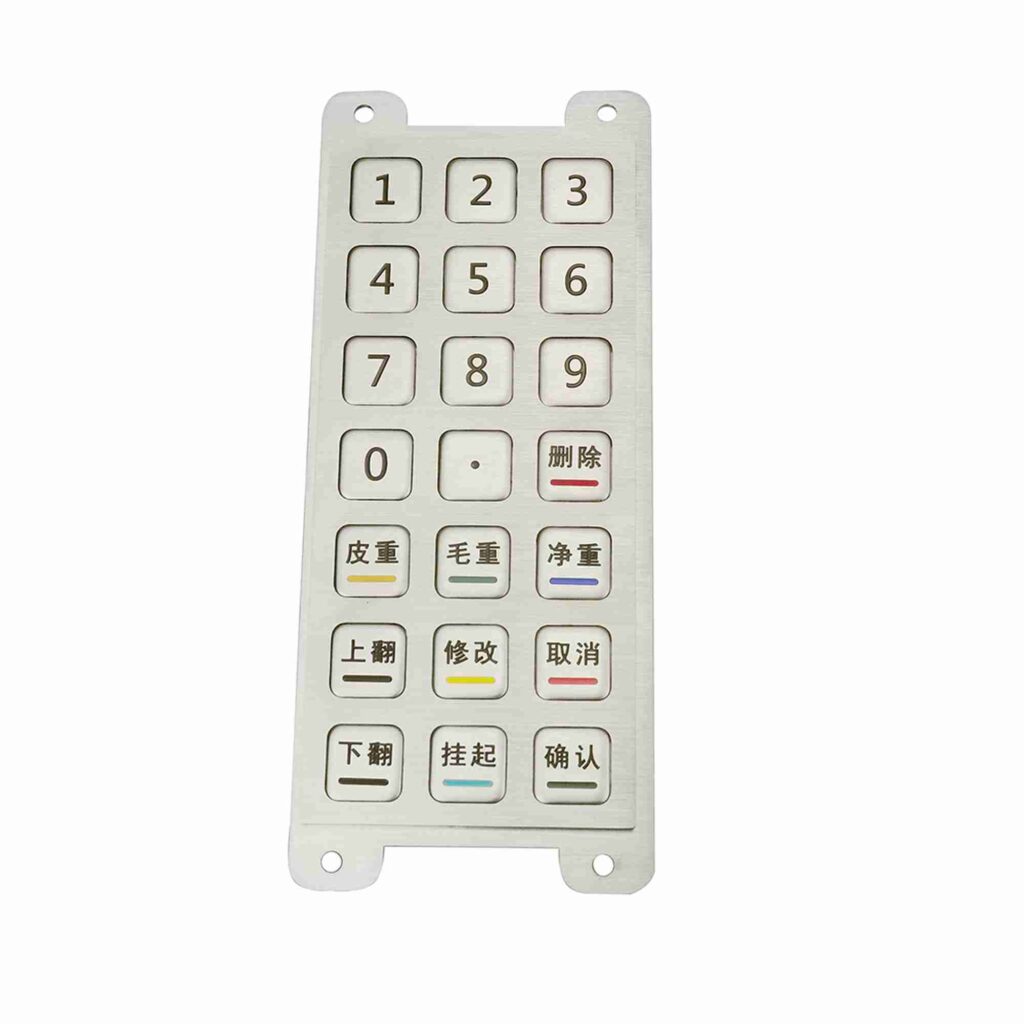
Metal construction does the heavy lifting here. Keypado engineers its keypads for vandal-proof, IP-rated durability, pairing a tough alloy body with sealing that resists both physical abuse and environmental ingress. Two problems, one solution: an enclosure engineered to handle strikes and spills at the same time.
Get a Custom Metal Keypad Quote From Keypado
Does IP Sealing Affect Legibility Over Time?
Sealing protects the marking, not just the electronics underneath. Because moisture and debris can’t creep behind the engraved surface, characters stay sharp instead of fading or lifting like printed labels often do. Keys also get tested against millions of presses. The combination of sealed edges and vandal-proof metal means legibility holds up long after installation.
What Layout Options Work With Sealed Keypads?
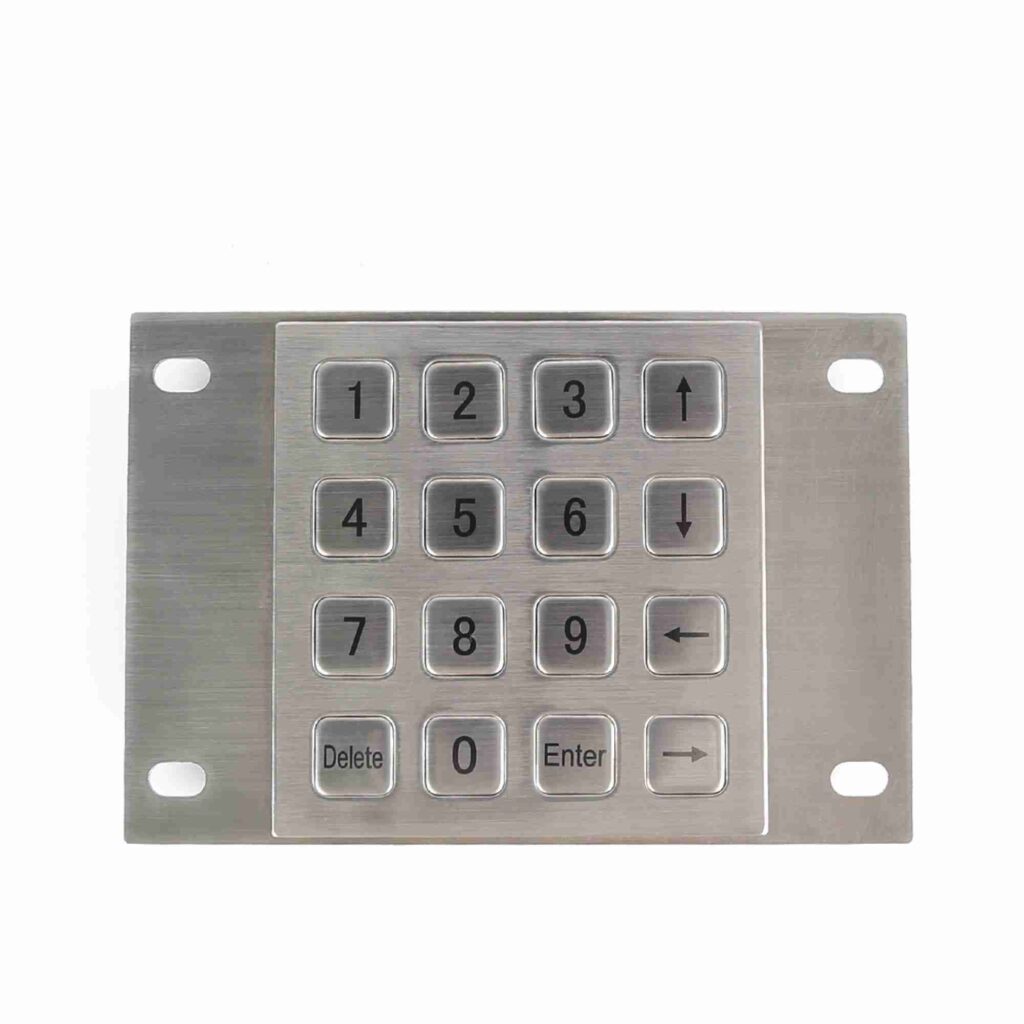
Sealing doesn’t limit configuration. Custom 3×4 and 4×4 layouts get built to match exact panel cutouts. Integrators aren’t stuck adapting hardware to fit a stock footprint.
For OEM teams speccing equipment that lives outdoors or in wash-down environments, sealing and layout flexibility work together:
Dust/water resistance: IP65+ blocks ingress around engraved keys
Impact resistance: Vandal-proof metal survives millions of presses
Fit precision: Custom 3×4/4×4 layouts match panel cutouts exactly
Combined durability: Metal construction handles both abuse and exposure
Skip proper sealing, and even a perfectly engraved keypad risks corrosion creeping in from the edges. Undermining the clean finish before the product ever reaches full service life.
Can You Safely Chemical-Clean Engraved Keypads?
Chemical cleaning damages engraved stainless steel keypads when harsh solvents strip the metal’s protective oxide layer. Proper engraving methods paired with the right post-processing routine keep clean laser-engraved metal keypads legible. Corrosion-free through years of institutional use.
Stainless steel relies on a thin passive layer for rust resistance. Once that layer gets stripped away — through deep engraving or aggressive scrubbing. Exposed oxygen reacts with the bare steel underneath. Harsh chemical cleaners speed up that reaction, turning a crisp engraved surface into a corrosion risk within months.
Paint changes that equation. Applying paint after laser marking isn’t decorative alone. It locks in the mark’s integrity and preserves the finished look under repeated contact. A painted, sealed engraving resists the kind of chemical exposure that would otherwise degrade bare metal markings.
Which cleaning agents damage engraved stainless keypads?
Bleach-based solutions and abrasive scouring pads pose the highest risk to unsealed engravings. Isopropyl alcohol wipes and mild soap solutions, by contrast, clean effectively without attacking a properly sealed finish.
Avoid: chlorine bleach, ammonia-based sprays, steel wool
Safer: diluted isopropyl alcohol, pH-neutral soap, microfiber cloths
Does industrial marking hold up in harsh environments?
Corrosion-resistant marking techniques deliver permanent identification built for punishing conditions. Industries spanning medical, defense, oil and gas, and semiconductor manufacturing rely on this approach for compliance-ready labeling that survives constant exposure.
Keypado applies that same standard to metal keypad production. Field-proven across deployments exceeding 100,000 units, the keypads hold up through repeated wipe-downs, sanitizing routines, and daily handling in kiosks, lockers, and access-control systems. Without the engraving fading, flaking, or inviting corrosion underneath.
How Does Keypado Test Engraving Durability?
Every production batch runs through ISO-certified quality control before it ships. Batch testing checks that markings hold up under real-world wear, not just factory-fresh appearance. That process backs the on-time delivery schedules OEM buyers depend on for planned production runs.
Durability testing matters most for clean laser-engraved metal keypads. Faded or peeling markings undermine both function and safety in access control panels, kiosks, and vending equipment. A keypad with unreadable numbers is a liability, not just a cosmetic flaw. Procurement leads need proof that engraving survives years of finger contact, cleaning chemicals, and outdoor exposure.
Get a Custom Metal Keypad Quote From Keypado
Can OEMs Verify Durability Before Ordering in Volume?
Yes. Fast sampling and low minimum order quantities let engineering teams pilot-test chemical resistance. Wear patterns before committing to a full production run. This approach reduces the risk of discovering engraving problems after thousands of units are already built.
What Evidence Backs Long-Term Reliability Claims?
Field data carries more weight than lab specs alone. Keypado’s designs are proven across deployments exceeding 100,000 units, giving integrators a track record rather than a promise. That scale of real-world use surfaces wear issues that short-term testing misses.
Trust also comes from breadth of experience. Products serve more than 200 clients across over 30 countries, spanning industries from fuel dispensers to medical equipment. That geographic and sector spread means the keypads face varied climates, cleaning protocols, and usage intensities:
Batch testing — every run checked before shipment
ISO-certified process — consistent quality control standards
Pilot sampling — low MOQ verification before scaling
Field-proven scale — reliability confirmed at 100k+ units deployed
That combination gives procurement teams verifiable evidence, not marketing claims, before signing off on a supplier.
What Should OEMs Look For in a Partner?
Four things separate a real manufacturing partner from a reseller: direct factory access, engineering support, low-risk sampling, and integration-ready hardware. OEM design engineers and procurement leads lose time and money working through middlemen who add cost without adding expertise. The right partner removes that layer entirely.
Keypado runs its own production out of Yuyao, Zhejiang, China, rather than outsourcing through a broker. That matters for OEM teams because factory-direct manufacturing means design changes, tooling questions, and quality issues get resolved without a chain of intermediaries slowing things down.
Does the partner offer engineering support before production starts?
A strong partner reviews CAD files and helps refine layouts before committing to tooling. Keypado provides this kind of engineering support at no cost, including free CAD review and customization, without markups from a third party. For teams building clean laser-engraved metal keypads into a new product, that upfront review catches layout or clearance problems early. They turn into expensive reworks.
Can the partner support a pilot run without big commitments?
Yes — low minimum order quantities and fast sampling let teams validate a design before scaling. Keypado supports pilot runs with low MOQ, quick sampling, and short lead times, which gives engineering teams room to test fit, function, and durability before locking in a full production order.
Integration compatibility rounds out the checklist. Keypado keypads offer USB and matrix output. Controller integration into existing OEM electronics stays straightforward rather than requiring custom firmware work. Procurement leads evaluating partners should confirm each of these four points directly: factory location, engineering review, sampling flexibility, and output compatibility. Skipping any one of them raises the odds of delays, added cost, or a keypad that doesn’t fit the system it was built for.
FAQ
Can laser-engraved metal keypads survive repeated chemical cleaning?
Yes. The engraving fuses directly into the metal surface rather than sitting on top like paint or ink. Legibility holds up through repeated chemical cleaning cycles.
Does laser engraving compromise the metal’s corrosion resistance?
Engraving that digs into stainless steel strips away the chromium oxide passivation layer, exposing bare metal to corrosion. Non-destructive marking methods avoid this by producing dark, high-contrast marks without cutting into the surface.
How does IP-rated sealing protect the engraved markings?
IP65+ sealing keeps dust, water, grime, and grease out of the gaps around engraved characters, preventing contamination from reaching the switch layer or lifting the marking over time.
 English
  Deutsch
  Français
  Polski
  Português do Brasil
  Español
  日本語
日本語  Русский
  العربية
  Italiano
  Nederlands
  Türkçe
  한국어
한국어