
Selecting a metal keypad manufacturer should start with production capability, certifications, and real application experience, especially for harsh environments such as HMI terminals, kiosks, POS systems, and IoT devices. The best suppliers also provide custom engineering support, IP-rated testing, clear quality control, and fast, responsive communication, because these factors reduce development time and lower the risk of field failures.
If you want a supplier that can deliver long-term reliability, look for vandal-resistant, shock-resistant designs, OEM customization depth, low MOQs, and fast sampling, ideally backed by proven deployments in demanding applications.
Key Takeaways
Metal keypads feature mechanical or membrane switches, with mechanical keys offering faster response times and individual replaceability.
Industrial metal keyboards operate reliably in extreme conditions across HMI terminals, IoT devices, POS systems, and medical equipment.
Keypado, located in Yuyao, Zhejiang, China, manufactures metal keypads designed specifically for harsh marine and industrial environments.
Mechanical keypads cost more than membrane alternatives but provide superior durability and reduced maintenance in demanding applications.
What prerequisites should you gather before starting?
OEMs sourcing a metal keypad manufacturer need three core pieces of information before any conversation begins: the target deployment environment, the required materials, and the interface specifications. Skipping this groundwork costs time and delays sampling.
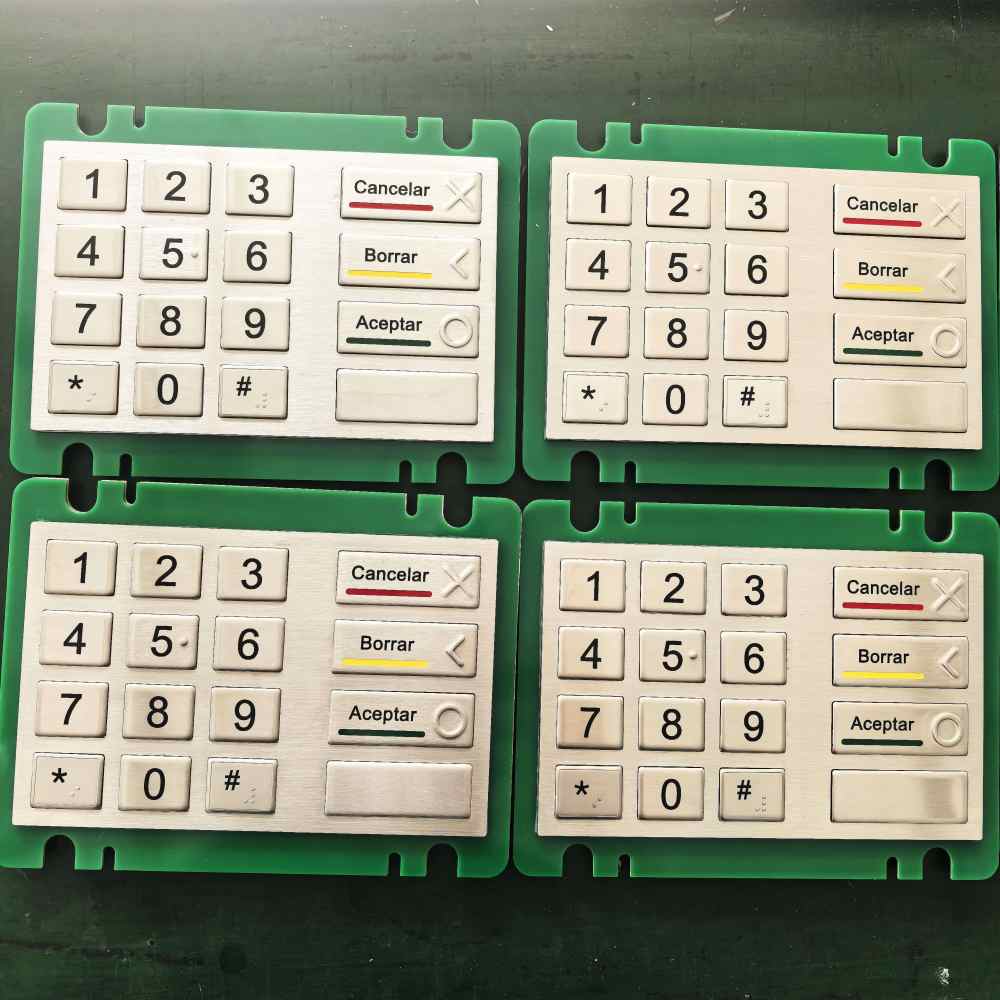
Get a Custom Metal Keypad Quote From Keypado
What environments are metal keypads typically built for?
Metal keypads serve demanding applications: access control systems, lockers, vending machines, fuel dispensers, ticketing terminals, self-service kiosks, and industrial control panels. Each environment carries its own stress profile. A fuel dispenser faces chemical exposure; a public kiosk faces physical abuse. OEMs should document the specific conditions their device will encounter before approaching any manufacturer.
What materials and interface options should OEMs define upfront?
Industrial metal keypads are built primarily from stainless steel or other durable metals, engineered to withstand high humidity, corrosive environments, and repeated physical impact. Knowing the required material grade narrows the supplier list immediately.
Interface requirements matter just as much. OEMs should confirm whether their system needs USB, matrix, or PS/2 output before requesting a sample. Mismatched interfaces mean redesign cycles and wasted lead time.
Here’s a quick checklist of prerequisites to gather:
Deployment environment — humidity levels, chemical exposure, impact risk
Material specification — stainless steel grade or alternative durable metal
Interface type — USB, matrix, or PS/2 output
Layout requirements — key count, function assignments, engraving needs
Volume estimate — pilot run size and projected production quantities
How do you evaluate build quality and durability standards?
Evaluating build quality in a metal keypad manufacturer starts with two non-negotiable benchmarks: mechanical endurance and environmental protection ratings. Skipping this evaluation risks deploying input devices that fail prematurely in the field. A costly mistake for any OEM program.
What mechanical endurance rating should a metal keypad have?
Vandal-proof metal keys are engineered to withstand millions of presses, making them genuinely suited for high-traffic, public-facing deployments like kiosks, lockers, and fuel dispensers. That kind of cycle life isn’t accidental — it comes directly from metal construction. Delivers vandal-proof, IP-rated durability that plastic alternatives simply can’t match. OEM clients should request documented cycle-life data before committing to a supplier.
Does IP rating really matter for industrial keypads?
Short answer: absolutely. IP65+ sealing blocks both dust ingress and water ingress. Are two of the most common failure triggers in harsh industrial environments. Beyond moisture, keypads used in high-risk settings are often hardened to resist shock and even explosion-level forces. Rugged industrial keyboards also withstand exposure to dirt, oil, and chemicals. And can be cleaned with industrial-grade cleaners without degrading performance.
Here’s a practical checklist OEM procurement teams use when auditing durability standards:
Confirm the IP rating — verify the keypad carries at least IP65 certification for dust and water resistance.
Request cycle-life documentation — ask for test data confirming the keypad’s mechanical endurance under repeated press cycles.
Check chemical resistance — confirm the device tolerates industrial cleaning agents without surface or circuit degradation.
Assess shock and impact hardening — for high-risk environments, verify the unit meets relevant shock-resistance standards.
Review material construction — stainless steel and zinc alloy housings signal long-term structural integrity for demanding OEM deployments.
How do you assess customization and engineering support capabilities?
Assessing a metal keypad manufacturer starts with verifying the depth of customization options and the directness of engineering access. Manufacturers that offer factory-direct support remove intermediary markups and compress development timelines significantly.
OEM clients should work through these steps before committing to a supplier:
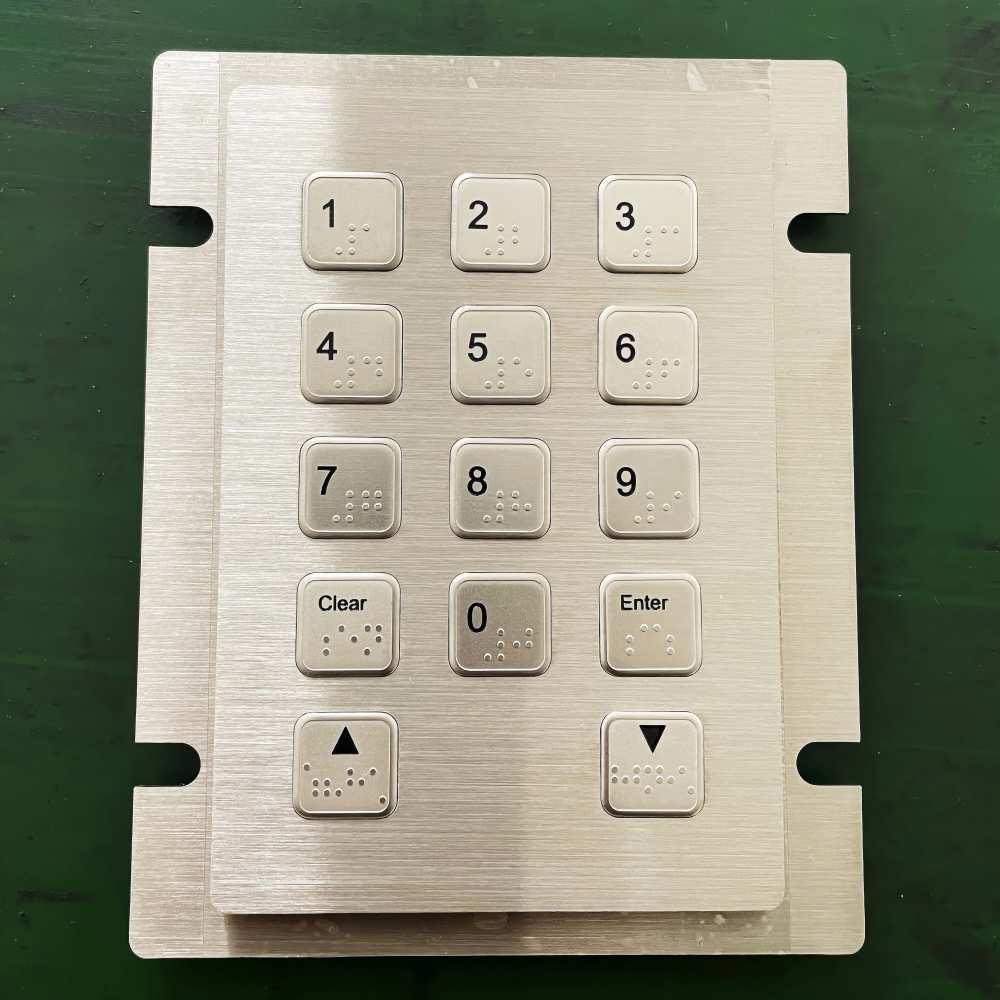
Request a full list of layout options. Confirm that standard configurations like 3×4 and 4×4 grids are available, and ask whether non-standard panel dimensions can be accommodated.
Ask about interface flexibility. A capable manufacturer supports multiple connection types — USB, matrix, and PS/2 — so the keypad integrates cleanly with existing system architecture.
Confirm engraving and backlighting availability. Custom legends, engraved key labels, and backlit keys are essential for branded or low-light deployments.
Strong manufacturers offer engineering review at no cost, allowing OEM teams to validate fit and function before tooling begins.
Clarify mounting and integration formats. Options should include open frame, built-in, panel mount, and rack mount versions so the device fits the target enclosure without redesign.
Get a Custom Metal Keypad Quote From Keypado
What mounting options should a manufacturer support?
Industrial input devices are designed for seamless integration into diverse work environments. Clients should expect open frame, built-in, panel mount, and rack mount configurations as baseline offerings — not premium add-ons.
Does factory-direct support actually speed up development?
Factory-direct engineering support eliminates the back-and-forth that comes with distributor-mediated projects. When a manufacturer provides free CAD review. Handles customization in-house, OEM teams move from concept to approved sample faster and with fewer revision cycles.
A manufacturer that checks every box above gives OEM clients a reliable foundation. Fewer surprises in the field, and a product that fits the panel on the first try.
How do you verify quality certifications and production reliability?
Verifying a metal keypad manufacturer starts with two concrete checkpoints: ISO9001 certification and batch inspection reports. These documents signal a manufacturer’s commitment to consistent output — not just on a good day. Across every production run that feeds a long-term OEM deployment.
Here’s a practical process OEM procurement teams follow when evaluating a supplier.
Request the ISO9001 certificate directly. Ask for the current, valid certificate — not a logo on a website. Confirm the scope covers the manufacturing processes relevant to the order.
Review batch inspection reports from past production runs. These reports show whether quality holds at volume, not just during a sample build. A manufacturer that provides them routinely has nothing to hide.
Ask for deployment references at scale. Proven performance across 100,000+ unit deployments demonstrates that quality doesn’t erode when production ramps up.
Check the breadth of the client base. A supplier trusted by more than 200 clients across more than 30 countries has been stress-tested by diverse industries and supply chain conditions — that’s broad, independent validation.
Why does production scale matter for quality assurance?
Maintaining quality across a small pilot run is straightforward. Sustaining that same standard across high-volume production is where many manufacturers fall short. Deployment history at scale is one of the most honest indicators of a supplier’s real capability.
What happens when industrial input devices fail in the field?
A keyboard failure on an assembly line doesn’t just cause inconvenience — it shuts the line down entirely. Standard-grade components simply aren’t built for that consequence. Procurement teams that skip rigorous quality verification risk exactly that outcome: costly downtime traced back to a preventable sourcing decision.
How do you confirm sampling speed and minimum order flexibility?
Confirming sampling speed and minimum order flexibility starts with a direct conversation with the metal keypad manufacturer about turnaround commitments and production minimums. OEMs that skip this step risk locking into full production runs before validating a design. A costly mistake that delays product launches.
Follow these steps to verify both factors before placing any order:
Request a sample timeline in writing. Ask the manufacturer to confirm a 7-day sample turnaround so design validation fits within the project schedule.
Clarify the minimum order quantity for pilot runs. Low MOQ options let OEMs test a small batch in real field conditions without overcommitting budget.
Confirm OEM/ODM support scope. Ask whether engineering assistance is included, since that support directly cuts development time and strengthens field reliability.
Ask for a lead time commitment on production orders. Short lead times after sampling keep the overall timeline tight.
Why does sample turnaround time matter so much for OEM projects?
A fast sample turnaround — like a 7-day window — lets OEM teams validate mechanical fit, interface compatibility. Durability before committing to a full production run. Delays at the sampling stage cascade into missed launch windows and added engineering costs.
How does low MOQ reduce risk during early product development?
Low minimum order quantities allow OEMs to run controlled pilot deployments without large upfront inventory exposure. Catching design issues at the pilot stage is far cheaper than discovering them after a full production batch ships.
Choosing the right metal keypad manufacturer comes down to finding a partner who genuinely understands your equipment’s demands. Backs that understanding with real expertise. Look for someone who listens to your challenges, offers transparent engineering support. Proves their commitment through quality certifications and consistent delivery. When you find a manufacturer that treats your success as their own, you’ve found the right fit—and that’s when your equipment truly thrives in the toughest environments.
 English
  Deutsch
  Français
  Polski
  Português do Brasil
  Español
  日本語
日本語  Русский
  العربية
  Italiano
  Nederlands
  Türkçe
  한국어
한국어