
When it comes to design custom metal keypads, custom metal keypad design for harsh environments starts with vandal-resistant, IP-rated metal construction, mechanical or capacitive key technology, and layouts matched to the mounting panel. Keypado engineers builds each unit with custom interfaces (USB, matrix, PS/2), engraving, and backlighting, then validates durability through ISO9001 batch testing before scaling past 100,000-unit deployments.
What Do You Need Before You Start Designing?
Four things matter most: a clear factory contact, engineering review, prototype access, and quality documentation. Skipping any one of these adds weeks to a project and risks costly tooling changes later. OEM hardware engineers who line these up first move from concept to production far more smoothly.
Keypado operates out of Yuyao, Zhejiang, China, which gives engineering teams a direct line to the factory floor rather than a chain of distributors. That factory-direct relationship matters when specs shift mid-project, because changes route straight to the people building the parts. No middleman means fewer delays and fewer miscommunications about tolerances or materials.
Get a Custom Metal Keypad Quote From Keypado
Why does a free CAD review matter for custom keypad projects?
A CAD review catches mechanical conflicts before molds get cut. Engineers who design custom metal keypads get factory-direct support to check layouts, mounting depth, and connector placement against real manufacturing constraints. This step alone prevents rework that would otherwise surface after tooling is already paid for.
How does prototyping fit into the process?
Fast sampling and low minimum order quantities let integrators test a design without committing to a full production run. That matters most for teams building a metal keypad for harsh use. Field validation—salt spray, vibration, repeated key presses—needs real hardware, not just drawings.
Before finalizing any order, engineers should also request the following:
ISO9001 documentation confirming the quality system in place
Batch inspection reports for validation and sign-off planning
Sample units for independent environmental testing
Confirmation of housing material (stainless steel or zinc alloy) and IP rating target
Having these four elements ready shortens the path from sketch to shippable product.
How Do You Choose Metal and Sealing Ratings?
Material and sealing decisions start with the installation environment, not a catalog page. Public-facing terminals, outdoor kiosks, and unmanned lockers each demand a different combination of housing metal and ingress protection to survive daily abuse.
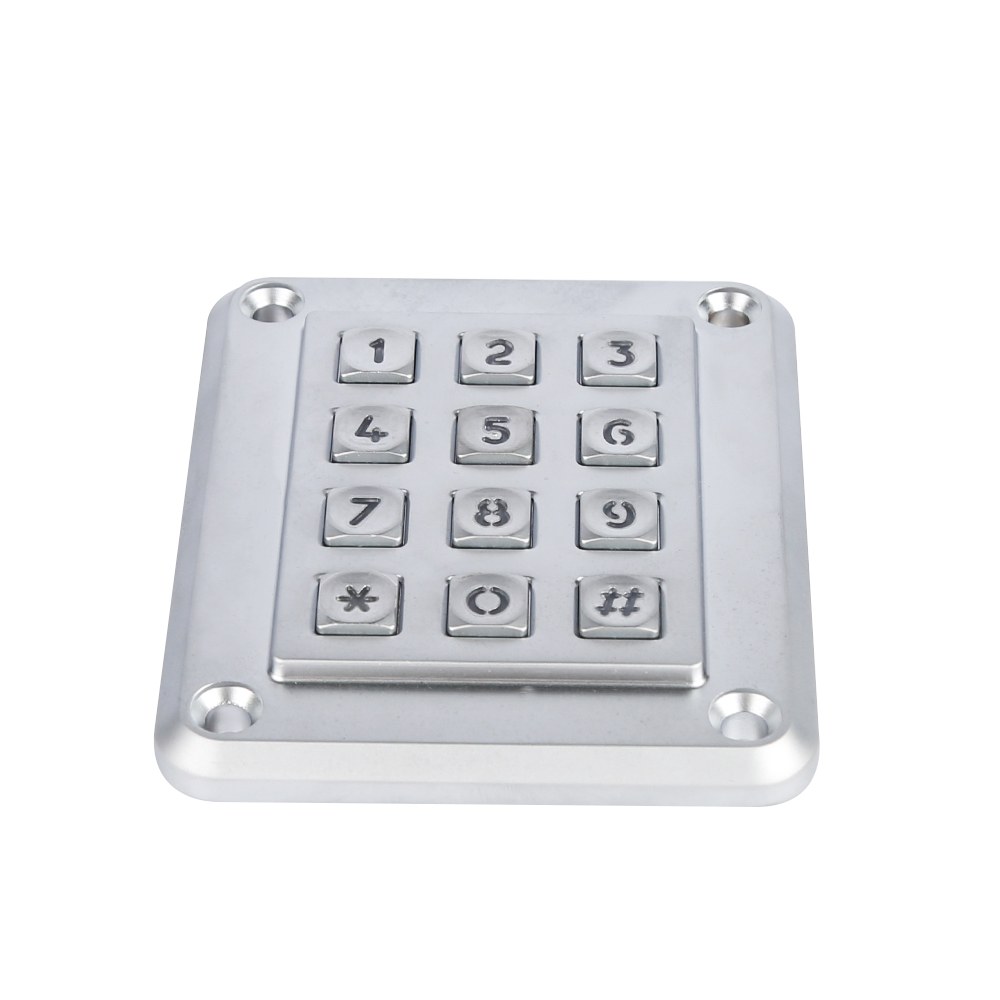
Engineers who design custom metal keypads typically weigh two variables together: the housing alloy and the sealing rating. Metal construction alone already outperforms plastic input devices, delivering vandal-proof, IP-rated durability that molded housings can’t match. Stainless steel and zinc alloy are the two go-to choices. Stainless steel resists corrosion, vandalism, dust, and constant wear in public or industrial settings. Zinc alloy offers a lighter, cost-conscious alternative for lower-abuse deployments.
A practical selection sequence looks like this:
Identify the exposure category — indoor panel, semi-outdoor kiosk, or fully exposed access point.
Match housing material to abuse level: stainless steel for high-vandalism or corrosive settings, zinc alloy for controlled indoor use.
Set the sealing target based on moisture and dust exposure, aiming for IP65+ protection against water and dust ingress on any outdoor install.
Confirm the housing structure supports that IP65-level configuration for the specific application — outdoor kiosk, access system, or self-service machine.
Validate the finished assembly against real-world conditions before locking the design.
Get a Custom Metal Keypad Quote From Keypado
What IP rating fits an outdoor kiosk or access point?
Outdoor installations generally need IP65 or higher to keep dust and water from reaching internal contacts. A metal keypad for harsh use in a fuel dispenser, self-service kiosk, or access control panel depends on this sealing threshold to maintain stable performance through rain, washdowns, and airborne grit.
Stainless steel or zinc alloy — which wins for public terminals?
Stainless steel takes the edge in high-traffic, high-vandalism locations because it shrugs off corrosion and repeated impact better than zinc alloy. Zinc alloy still earns its place in lower-exposure, cost-sensitive builds where daily wear is lighter.
How Do You Configure Layout and Interface?
Configuration starts with matching the keypad footprint to an existing panel cutout, then narrowing down electrical interface and finish. Engineers typically follow a short sequence rather than starting from a blank sheet. Most industrial enclosures already dictate size and mounting constraints.
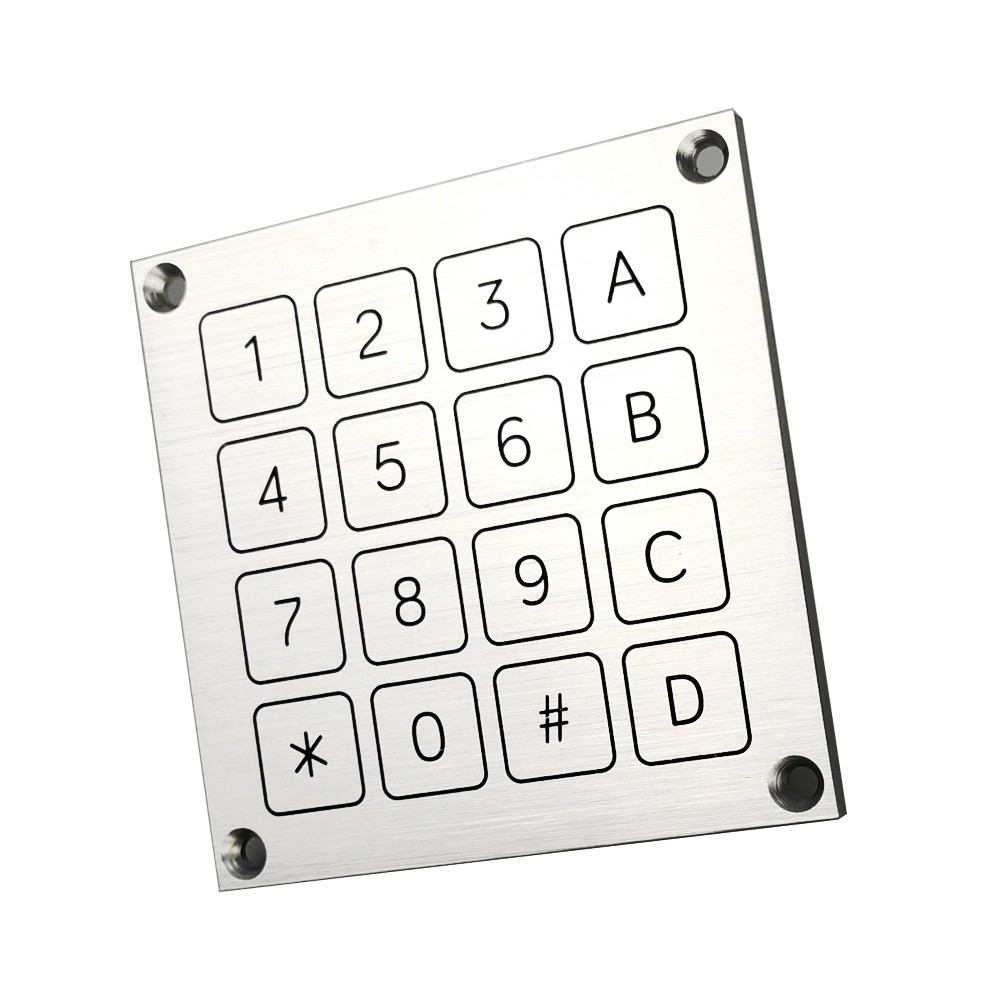
Measure the existing panel cutout. Custom 3×4 or 4×4 layouts get built to fit that opening directly, so a redesign of the enclosure isn’t necessary.
Select an output type. USB or matrix output simplifies wiring into a controller board that’s already part of the system, cutting integration time compared to sourcing a mismatched interface.
Choose additional interface needs. PS/2 remains an option alongside USB and matrix for teams supporting legacy controllers.
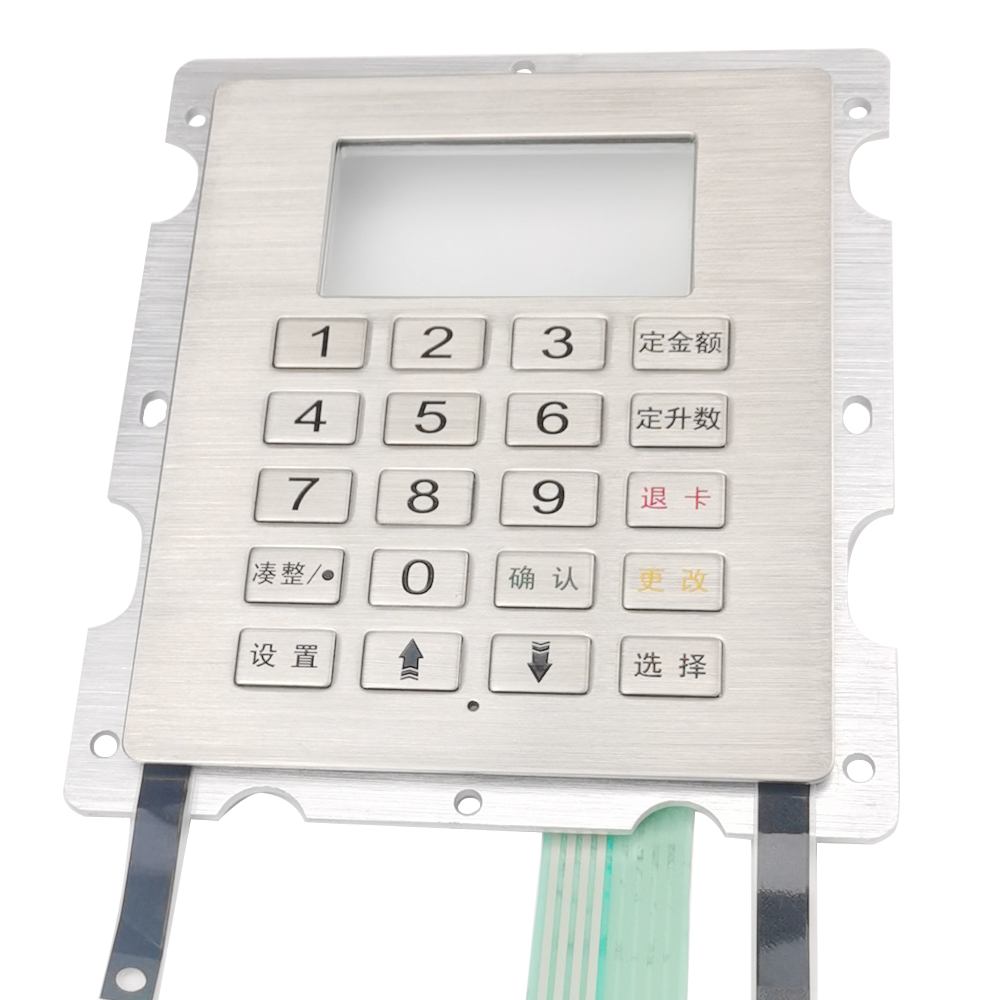
Add engraving, backlighting, and mounting details. These finishing touches round out the customization scope for OEM hardware engineers who need a part that looks and functions exactly as specified.
Confirm key durability requirements. Vandal-proof metal keys are engineered to survive millions of presses without losing tactile response, an important spec for kiosks and access panels facing constant public use.
What Interfaces Work Best for Industrial Controllers?
USB and matrix outputs cover most modern controller boards, offering straightforward wiring without custom firmware work. PS/2 stays available for integrators supporting older or legacy control systems that haven’t migrated to USB.
Can Layouts Be Customized Beyond Standard Grids?
Standard 3×4 and 4×4 grids serve the majority of access control and vending applications. Layout, interface, engraving, backlighting, and mounting can all flex around a specific panel design. Kiosk systems integrators working with unusual enclosure shapes get a keypad built around the equipment, not the other way around. That approach to designing custom metal keypads keeps the enclosure as the fixed constraint. The input device as the flexible piece. Which is usually the faster path to production.
How Do You Sample and Test Your Design?
Sampling starts with a low-minimum production run, followed by inspection against ISO-certified quality benchmarks. Skipping this stage risks costly retooling later, once a flawed layout or interface has already been baked into a full production order. Engineers who validate early save weeks of redesign time down the road.
The process to design custom metal keypads and confirm they hold up follows a clear sequence:
Submit CAD files and functional requirements for review.
Receive low-MOQ sample units, typically within about 7 days.
Test fit, function, and interface compatibility against the target enclosure.
Flag any adjustments needed to layout, backlighting, or connector type.
Move to batch production once samples pass integrator testing.
Get a Custom Metal Keypad Quote From Keypado
How long does sampling take?
Sample turnaround runs roughly 7 days from order confirmation, thanks to a low minimum order quantity that keeps prototype units moving fast. That speed matters for OEM teams working against product launch deadlines. Every week spent waiting on parts delays the whole release schedule.
Does the process scale to full production?
Yes — designs get proven across deployments exceeding 100,000 units, so a working sample isn’t a lab curiosity. It’s a preview of what volume manufacturing will deliver. Pilot runs carry the same low-MOQ, fast-sampling support, which lowers the financial risk of committing to a new metal keypad for harsh use before demand is confirmed.
Quality control doesn’t stop at sampling, either. On-time delivery gets backed by batch testing throughout production, catching defects before units ship rather than after they’re installed in the field. For integrators managing access control panels or kiosk fleets, that inspection discipline means fewer field failures and fewer replacement calls months after installation.
What Mistakes Undermine A Metal Keypad For Harsh Use?
Four recurring errors turn a promising keypad project into a field-failure headache: skipping environmental testing, ignoring specific stressors, picking an unproven vendor, and glossing over durability specs. Each mistake compounds the others, and the damage often shows up long after the design is locked and units are shipping.
Why does skipping stress testing cause problems later?
Damage mechanisms rarely announce themselves early. Corrosion, key fatigue, and seal degradation build slowly, staying invisible until a keypad fails in the field. Teams that design custom metal keypads without environmental stress analysis often discover flaws only after deployment, when fixes cost far more.
What gets missed when engineers finalize a design too fast?
Locking a design before accounting for temperature swings, moisture, vibration, UV exposure, and chemical contact sets up premature failure. These five stressors interact with materials in ways that aren’t obvious on paper.
Beyond environmental factors, two other traps deserve attention:
Choosing an unfamiliar supplier instead of one with a proven track record — Keypado’s history spans over 200 clients across more than 30 countries, a benchmark worth comparing against.
Underspecifying vandal resistance and consistent operation — a metal keypad for harsh use that skimps on either trait defeats the purpose of choosing metal construction in the first place.
Product designers who address these four areas upfront avoid costly redesigns and protect long-term reliability in access control, kiosk, and industrial control panel deployments.
Designing a custom metal keypad for harsh environments isn’t just about picking tough materials—it’s about thinking through every detail, from layout to interface, with your specific application in mind. When you partner with an experienced manufacturer who understands the demands of extreme conditions, you get solutions that actually hold up. The right keypad becomes invisible in your equipment, doing its job reliably day after day, no matter what gets thrown at it. That’s the difference between a component that survives and one that truly thrives.
FAQ
What should engineers prepare before starting a custom metal keypad design?
Engineers need a clear factory contact, engineering review, prototype access, and quality documentation. Lining these up first moves projects from concept to production smoothly and avoids costly tooling changes later.
Why does working directly with a factory in Yuyao, Zhejiang matter?
Keypado operates factory-direct from Yuyao, Zhejiang, China, giving engineering teams a direct line to the factory floor. Spec changes route straight to the people building the parts, reducing delays and miscommunication about tolerances or materials.
How do engineers choose between stainless steel and zinc alloy housings?
Stainless steel resists corrosion, vandalism, dust, and constant wear in public or industrial settings. Zinc alloy offers a lighter, cost-conscious option for lower-abuse deployments. The choice depends on matching housing material to the installation’s abuse level.
 English
  Deutsch
  Français
  Polski
  Português do Brasil
  Español
  日本語
日本語  Русский
  العربية
  Italiano
  Nederlands
  Türkçe
  한국어
한국어