
Stainless steel and hard-coat aluminum lead keypad chemical resistance, as both metals withstand solvents and cleaning agents without surface degradation. Keypado builds rugged metal keypads proven across 100,000-plus unit deployments. Laser engraving replaces paint, eliminating chemical attack on legends. IP-rated sealing further blocks corrosive ingress at every interface point.
Key Takeaways
Chemically resistant polymers inherently resist harsh solvents without requiring additional surface treatments or post-processing applications.
Industrial 3D printing materials withstand exposure to corrosive chemicals, wind, rain, UV light, and mechanical stress simultaneously.
Chemical-resistant materials prevent corrosive chemicals from permeating surfaces or causing degradation in end-use applications.
Keypado, located in Yuyao, Zhejiang, China, manufactures keypads using materials engineered for demanding chemical environments.
Why Does Keypad Chemical Resistance Matter So Much?
Keypad chemical resistance determines whether an input device survives real-world deployment or fails prematurely under exposure to cleaning agents, fuels, solvents, and industrial fluids. Keypads without adequate protection erode, soften, or warp — and a warped keypad is a broken keypad.
Here’s the core problem: chemical molecules diffuse into unprotected materials and push polymer chains apart. That process weakens the surface, distorts the shape, and ultimately kills functionality. Worse, degradation rarely stops at the keypad itself. Damaged chemical resistant keypad materials can compromise surrounding components, spreading the failure deeper into the equipment.
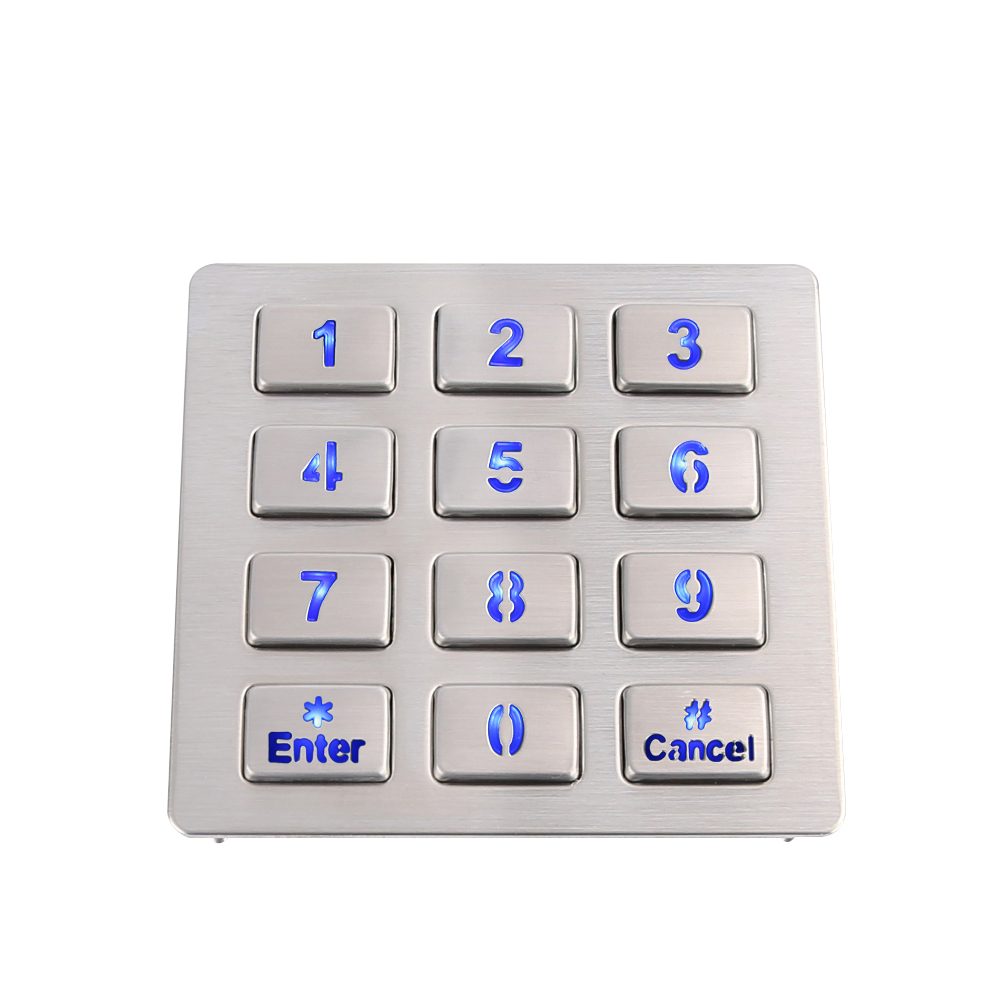
Get a Custom Metal Keypad Quote From Keypado
What Happens When a Keypad Fails Chemical Exposure?
When a keypad material breaks down, the damage shows up fast — sticky keys, faded legends, cracked overlays. Functionality drops, and the surrounding hardware faces contamination risk. Replacing failed parts costs organizations both time and money. In high-uptime environments like fuel dispensers or vending machines, downtime is never cheap.
Which Environments Put Keypads at the Highest Risk?
Industrial settings are the toughest test. Keypado designs rugged metal keypads and industrial input devices specifically for demanding applications. Fuel dispensers, vending machines, and industrial control panels — where chemical exposure is routine, not occasional.
The stakes look like this:
Erosion and softening from solvents and cleaning agents
Warping and misshaping from prolonged chemical contact
Component damage spreading beyond the keypad surface
Replacement costs in time, labor, and equipment downtime
Choosing the right materials from the start prevents every item on that list.
Which Base Materials Handle Chemicals Best?
Keypad chemical resistance starts with the base material — and for industrial-grade input devices, stainless steel and zinc alloy sit at the top of the list. Keypado builds rugged metal keypads from exactly these two materials, giving OEM clients a strong chemical resistance baseline right out of the factory.
Chemical resistant keypad materials like stainless steel and zinc alloy don’t need extra surface treatments to hold their own against harsh substances. The resistance is built into the metal itself — no coatings required to handle exposure to bases, solvents, or acids. That’s a meaningful advantage in environments where maintenance windows are short and downtime is expensive.
Stainless steel — resists corrosion, oxidation, and a wide range of industrial chemicals
Zinc alloy — offers solid structural integrity with good resistance to common solvents and cleaning agents
Both materials support vandal-proof, IP-rated construction suited to demanding field conditions
Does the base material alone guarantee long-term chemical resistance?
Not entirely. Long-term performance depends on three variables: exposure duration, temperature, and chemical concentration. A material that holds up fine during a daily wipe-down with a cleaning agent may behave differently under continuous submersion in the same substance. OEM engineers should evaluate real-world exposure conditions — not just the chemical identity — when selecting a keypad material.
Why does metal outperform plastic in chemically aggressive environments?
Metal construction delivers vandal-proof, IP-rated durability that most polymer alternatives can’t match at the same thickness and form factor. Plastics can soften, swell, or degrade when exposed to aggressive solvents. Stainless steel and zinc alloy hold their shape and surface integrity far longer, reducing replacement cycles. Keeping equipment running reliably in the field.
What Overlay Materials Offer the Best Protection?
Keypad chemical resistance starts with the overlay — the outermost layer that takes every splash, wipe-down, and chemical contact before anything else does. Choosing the right chemical resistant keypad materials for that surface determines how long a device survives in demanding environments like fuel dispensers, vending machines, and industrial control panels.
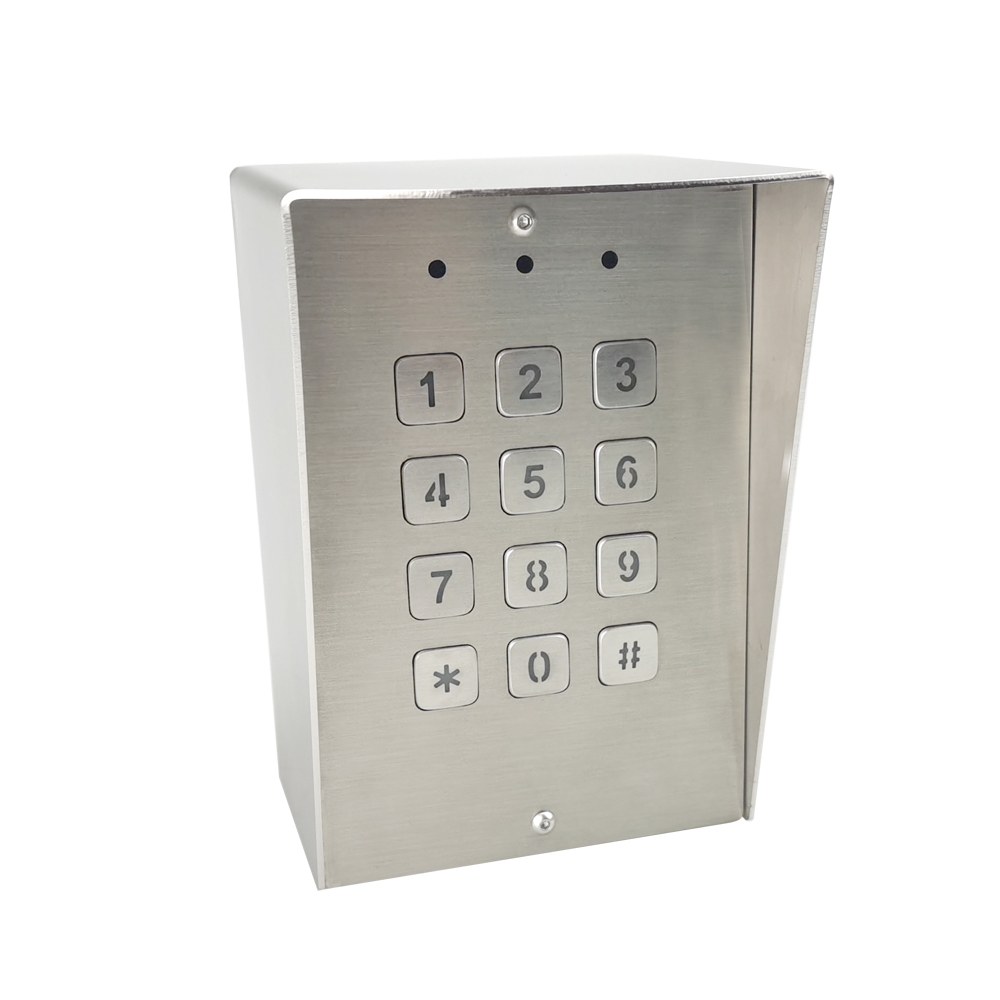
Get a Custom Metal Keypad Quote From Keypado
Does Exposure Frequency Change Which Material Wins?
Exposure frequency matters more than most OEM engineers expect. A material that would fail under continuous submersion can last indefinitely when wiped down with the same chemical just once a day. That distinction shapes the entire material selection conversation. A chemical resistant membrane switch rated for periodic cleaning doesn’t need the same spec as one sitting in a chemical bath.
Polyester or Polycarbonate — Which Overlay Holds Up Better?
The polyester vs polycarbonate overlay debate comes down to environment. Both are common choices for membrane keypad overlay material, but each has a different chemical tolerance profile. The smartest starting point is to look at similar materials already performing well in the target environment. Real-world evidence beats lab data sheets every time.
Beyond base material, surface treatments add another layer of defense:
Hard coating for keypads resists abrasion and common solvents
Polyurethane coating keypad surfaces handle oils and mild acids well
Epoxy coating keypad layers offer strong resistance to alkaline cleaners
Parylene coating keypad components provides a pinhole-free barrier against moisture and aggressive chemicals
Silicone keypad coating and silicone rubber keypad chemical resistance make silicone a reliable choice where flexibility and broad chemical tolerance are both required
A chemical resistant graphic overlay also preserves printed legends and branding under repeated cleaning cycles. A detail that matters for long-term field deployments.
Keypado builds custom layouts, engraving, and interface configurations around specific environmental requirements. All devices ship with IP65+ sealing as a baseline. The keypad surface finish and overlay spec get locked in during the engineering review stage. Every unit arrives ready for the conditions it will actually face.
Which Surface Finishes and Coatings Should You Choose?
Keypad chemical resistance starts with picking the right surface finish before a single unit ships. The wrong coating fails under solvents, UV exposure, or mechanical abrasion — and replacing deployed hardware costs far more than specifying correctly upfront.
Chemical resistant keypad materials fall into a few broad categories, each suited to different environments:
Hard coating for keypads — a thin, cured layer that resists scratches and common cleaning agents without adding bulk
Polyurethane coating keypad — flexible, moisture-resistant, and effective against mild acids and oils found in industrial settings
Epoxy coating keypad — harder and more chemically aggressive, handling stronger solvents but less forgiving under flex or impact
Parylene coating keypad — a vapor-deposited film that reaches into tight geometries, offering broad chemical and moisture protection
Silicone keypad coating — heat-stable and resistant to a wide range of chemicals, making silicone rubber keypad chemical resistance a reliable choice for high-temperature environments
Surfaces also face more than chemicals. Coated components used outdoors must hold up against UV light and sustained mechanical stress. Factors that accelerate coating breakdown even when chemical exposure alone seems manageable.
How Does Overlay Material Affect Chemical Performance?
The membrane keypad overlay material sits between the user and the switch stack, so its chemistry matters. The polyester vs polycarbonate overlay choice is a common decision point: polyester handles flexing and most solvents well. Polycarbonate offers better optical clarity but can craze under certain chemicals. A chemical resistant graphic overlay combines the right base film with inks and adhesives rated for the target environment.
What Makes a Membrane Switch Truly Chemical Resistant?
Membrane switch chemical resistance depends on the full stack — overlay, adhesive, and substrate — not just the top layer. Keypad surface finish and hard coating for keypads protect the graphic layer, while a well-sealed perimeter prevents chemical ingress at the edges. A chemical resistant membrane switch treats every layer as part of the barrier system.
Keypado’s metal keypads are proven across deployments exceeding 100,000 units. ISO9001-certified batch inspection confirms that keypad surface finish choices perform consistently across production runs. OEMs can work directly with Keypado’s engineering team — including free CAD review. To match the right coating to their specific chemical environment.
How Do You Pick the Right Spec for Your Application?
Matching keypad chemical resistance specs to a specific deployment starts with mapping the chemicals, frequencies. Concentrations the device will actually face in the field. Skipping that step leads to premature surface degradation, failed overlays, and costly field replacements.
The right spec depends on three practical factors:
Chemical type — cleaning agents, fuels, solvents, and acids each attack chemical resistant keypad materials differently
Exposure frequency — a daily wipe-down demands far less than continuous immersion
Environment — outdoor fuel dispensers, indoor vending machines, and industrial control panels each carry distinct risk profiles
Keypado serves OEMs across access control, lockers, vending machines, fuel dispensers, ticketing terminals, self-service kiosks. Industrial control panels — environments where chemical exposure risk varies widely but is never zero. That breadth of deployment, across more than 200 clients in over 30 countries, means Keypado’s engineering team has seen most exposure scenarios before.
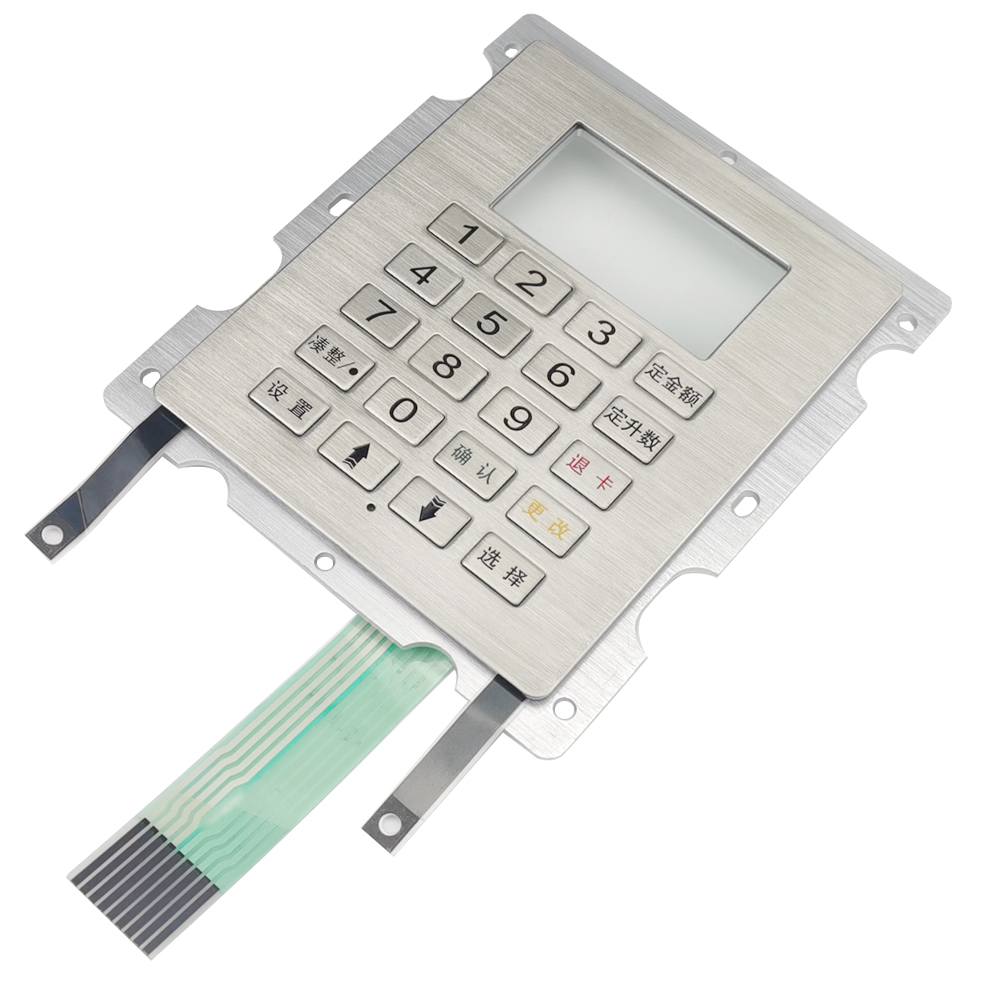
Get a Custom Metal Keypad Quote From Keypado
How Can OEMs Validate a Spec Before Committing to Volume?
Validation before full production is the smartest move an OEM can make. Keypado supports pilot runs with low minimum order quantities and fast sample turnarounds. Engineering teams can test membrane switch chemical resistance, keypad surface finish durability, and overlay performance under real conditions. Catching a material mismatch at the sample stage costs a fraction of what a field failure costs.
Does Industry Matter When Choosing a Chemical Resistant Membrane Switch?
Absolutely. A chemical resistant membrane switch built for a fuel dispenser faces hydrocarbon exposure. One built for a hospital kiosk faces repeated alcohol-based sanitizer contact. Keypado’s OEM/ODM support helps clients match the right chemical resistant graphic overlay, coating. Substrate to the specific demands of each industry — before a single production unit ships.
FAQ
Which base materials provide the strongest keypad chemical resistance?
Stainless steel and zinc alloy deliver built-in resistance to solvents, acids, and bases without requiring additional surface treatments or coatings.
How does Keypado prevent chemical attack on keypad legends?
Laser engraving replaces paint entirely, eliminating the surface vulnerability that allows chemicals to degrade or erase legends over time.
Where does Keypado manufacture its chemical-resistant metal keypads?
Keypado manufactures rugged metal keypads in Yuyao, Zhejiang, China, engineering them specifically for demanding applications like fuel dispensers and industrial control panels.
 English
  Deutsch
  Français
  Polski
  Português do Brasil
  Español
  日本語
日本語  Русский
  العربية
  Italiano
  Nederlands
  Türkçe
  한국어
한국어