
When it comes to customize laser-engraved metal keypad, laser engraving on Keypado’s metal keypads customizes key legends, icons, logos, and alphanumeric layouts with precise, wear-resistant marks. Engineers specify custom layouts, interfaces, and branding elements suited to access control, vending, or fuel dispenser applications. Backlighting compatibility, multilingual characters, and symbol sets round out options, supported by factory-direct engineering review across 200+ OEM client deployments worldwide.
What Do You Need Before You Start?
Three things matter most: a clear use case, a rugged base material, and a realistic sample timeline. Design engineers who skip any of these three steps often end up reworking layouts mid-production, which costs both time and budget. Keypado builds rugged metal keypads, keyboards, and telephones for access control systems, lockers, vending machines, and fuel dispensers, so the starting checklist should reflect the punishment those environments dish out. Moisture, vandalism attempts, extreme temperatures, and thousands of daily presses.
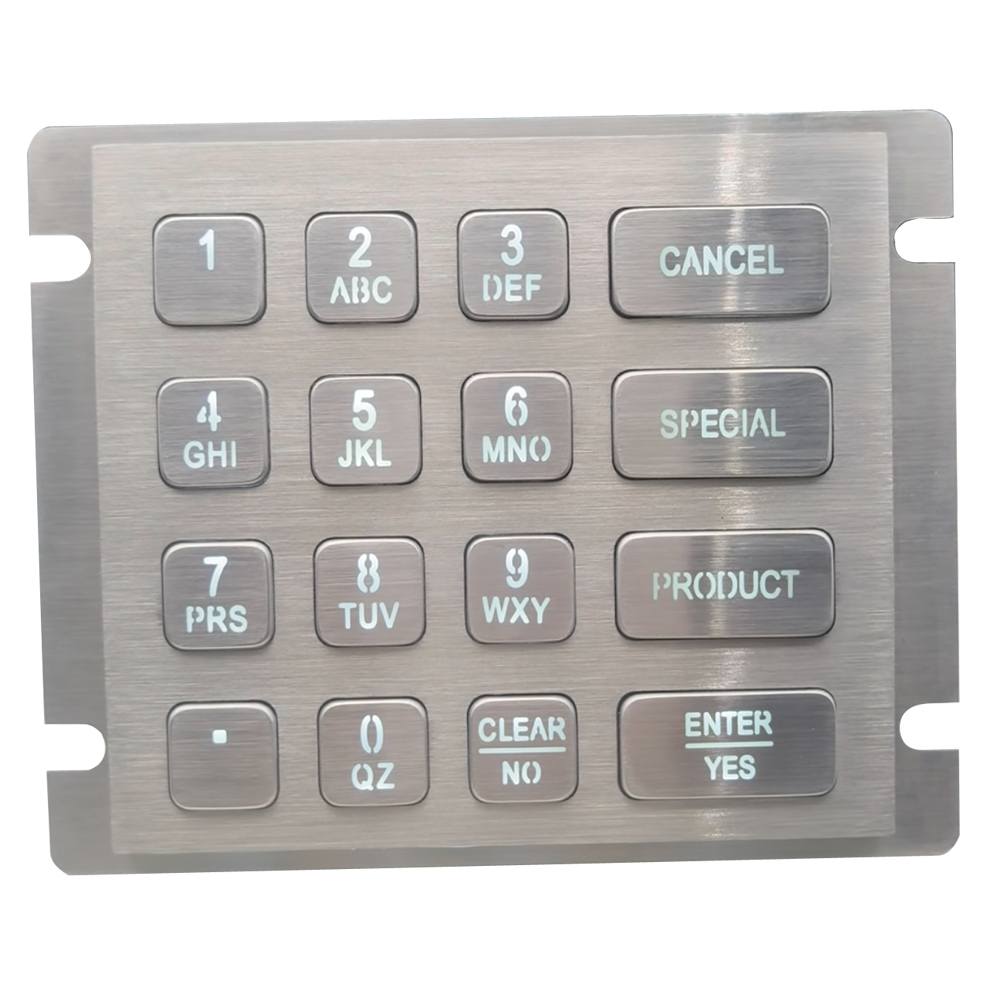
Get a Custom Metal Keypad Quote From Keypado
What environment will the keypad actually face?
Fuel dispensers demand different sealing and corrosion resistance than an indoor locker panel. Deciding on the environment first shapes every downstream choice, from alloy selection to IP rating targets.
Should engraving be planned separately from layout?
No — engraving, layout, and interface should be worked out together, not bolted on at the end. Keypado bundles custom layouts, interface options, and engraving into a single planning conversation. A key spacing decision often affects legend placement and readability.
Before requesting a sample, procurement and engineering teams should gather:
Application details — where the device installs and what it withstands (vandalism, weather, chemical exposure).
Interface requirements — USB, matrix, or PS/2, depending on the host system.
Layout draft — key count, spacing, and any function-specific labeling.
Engraving intent — icons, alphanumeric legends, or branded marks to customize a laser-engraved metal keypad for the specific product line.
Timeline expectations — low minimum order quantities support fast sample turnaround, letting teams validate a design before committing to full production.
Samples get produced at Keypado’s manufacturing base in Yuyao, Zhejiang, China. Engraving specs move from CAD file to physical part. Having these details ready before that first conversation shortens the path from concept to a working prototype.
How Do You Define Layout And Material?
Layout and material form the two foundational decisions behind every rugged keypad project. Get these right at the start, and the rest of the engineering process moves faster with fewer surprises.
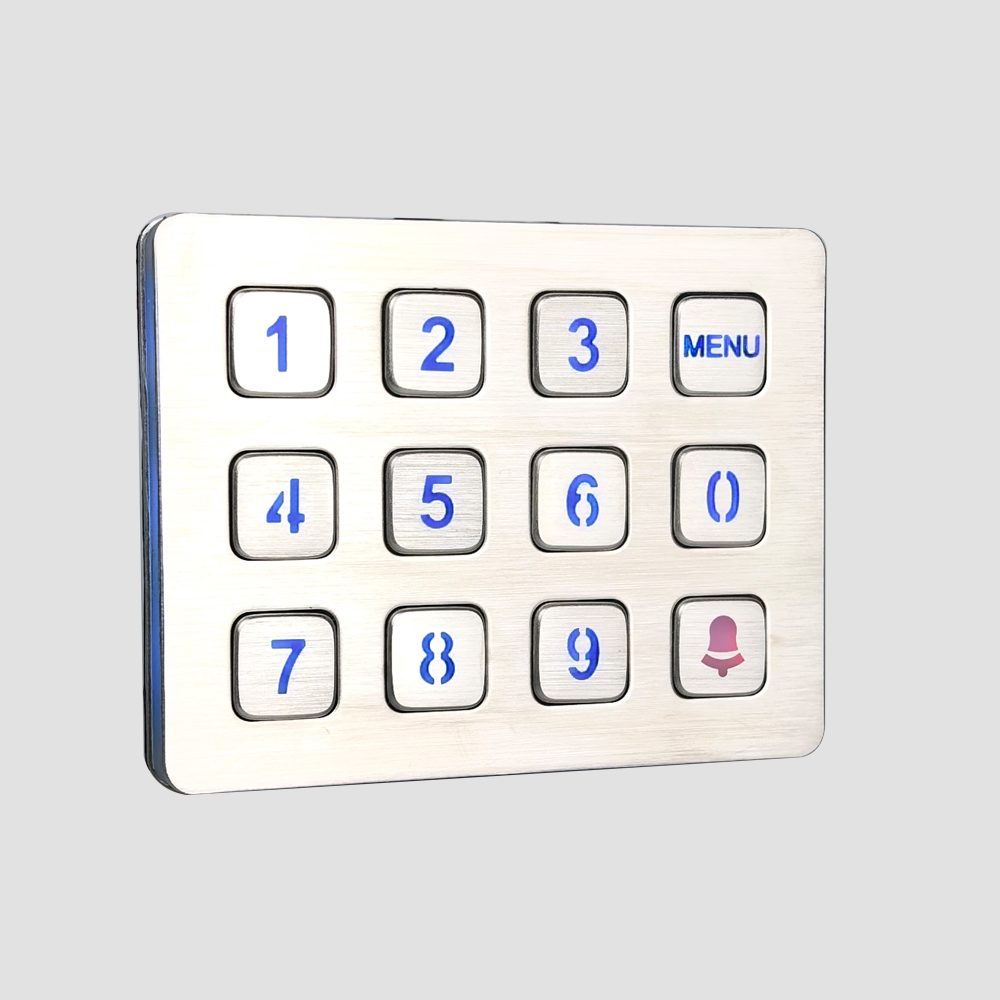
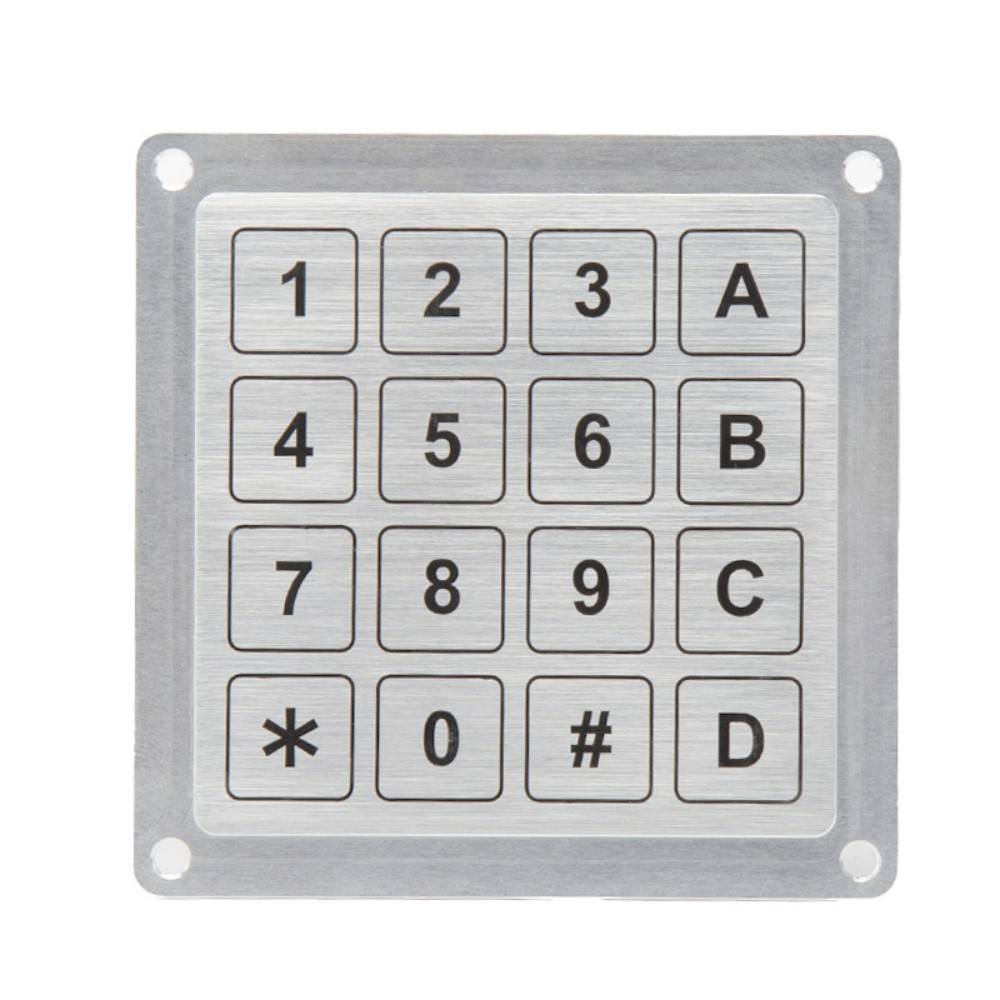
Design engineers who plan to customize a laser-engraved metal keypad usually begin with panel dimensions. Custom 3×4 or 4×4 layouts get configured to match an OEM’s specific panel before any engraving starts. The key grid fits the enclosure without redesign. Output interface matters too. USB and matrix output options let the finished keypad plug into existing controller hardware, sparing procurement teams from redesigning electronics around a new input device.
Material selection shapes engraving quality just as much as layout shapes fit. A few core decisions define this stage:
Base material — metal, PBT, ABS, or silicone, each requiring different laser settings for clean, legible marks
Panel layout — key count and spacing matched to mounting dimensions
Output interface — USB or matrix wiring for controller compatibility
Sealing requirement — IP rating needed for the operating environment
Get a Custom Metal Keypad Quote From Keypado
Which Material Works Best For Rugged Panels?
Metal remains the top choice for high-abuse environments like kiosks, lockers, and fuel dispensers. PBT, ABS, and silicone still show up in mixed-material assemblies, and each substrate calls for its own engraving depth and laser power to produce a sharp, durable mark.
Does Engraving Depth Affect Sealing?
Yes. Deeper engraving can compromise a panel’s seal against dust and moisture. An IP65+ rated seal protects the surface from ingress, which is why sealing integrity gets factored into the engraving spec from the outset rather than tested after the fact.
How Do You Test Engraving Samples First?
Testing starts with a small batch, not a full production run. OEM teams send blank keycaps or metal panels ahead of time, giving Keypado’s engraving specialists a real surface to work with before committing to volume. This early step lets engineers catch contrast, depth, and readability problems while changes still cost little.
A proper sample cycle follows a clear sequence rather than trial and error:
Submit sample panels or keycaps. Procurement or design teams ship a handful of blank units for evaluation.
Run test engraving settings. The team calibrates the equipment to find the depth and contrast that suit the chosen material.
Review proof documentation. Video proof arrives alongside the physical samples, giving engineers a chance to inspect the work firsthand before greenlighting production.
Confirm design specs. Approval at this stage locks in settings for the full order, avoiding surprises later.
This is where the promise to customize a laser-engraved metal keypad actually gets proven out, not just promised on a spec sheet.
Why does sample testing matter for OEM timelines?
Skipping this step risks discovering readability or wear issues after thousands of units already exist. Built-in OEM/ODM support at the sampling stage shortens development timelines and strengthens reliability once devices reach the field. Fewer redesign cycles mean fewer delays before launch.
What makes the feedback loop reliable?
Consistency comes from repetition. Keypado’s process has run through more than 200 client relationships worldwide. The sampling and proofing sequence follows a tested path rather than improvisation. Procurement managers get a predictable checkpoint, not a guessing game, before committing to a production order.
How Is The Keypad Engraved And Sealed?
Laser engraving cuts each icon, number, or legend directly into the metal surface, then sealing locks that marking against the elements. Engineers who customize a laser-engraved metal keypad get permanent graphics fused into the panel itself, not ink sitting on top waiting to rub off. That distinction matters most once a device sits outdoors for years, taking abuse from weather, chemicals, and constant thumb presses.
Metal laser engraving has grown into a widely trusted manufacturing technique for exactly this reason. The process permanently etches detailed patterns into the surface, allowing intricate icons and custom text to be produced without a single layer of paint or coating involved. Because the mark becomes part of the metal, it doesn’t chip, peel, or fade the way surface printing tends to over time.
Get a Custom Metal Keypad Quote From Keypado
Why does the engraving need to survive millions of presses?
Vandal-resistant metal keys are built to withstand millions of actuations, and the markings on them face that same punishment. A legend that wears away after a few thousand cycles defeats the purpose of a metal keypad in the first place. The etch has to be as tough as the key underneath it.
What keeps the finished keypad protected once engraving is done?
Metal construction gives the completed keypad vandal-proof, IP-rated durability, and sealing preserves that protection long after the laser work finishes. The build process generally follows this order:
Select the metal panel and finalize the custom layout.
Laser-etch icons, numerals, or branding directly into the surface.
Seal and assemble the unit to lock out moisture, dust, and tampering.
That sequence keeps engraved graphics legible for the full service life of the equipment.
What Mistakes Should You Avoid When Engraving?
Four missteps derail most engraving projects before a single keypad hits production. Skipping the goal-setting conversation tops the list. Teams jump straight to machine settings without deciding whether the priority is a premium, high-end look or brute industrial durability. And that gap shows up later as inconsistent depth, faded marks, or mismatched finishes.
Why does supplier selection matter for engraving quality?
Picking a vendor with no field history is a gamble procurement managers can’t afford. Keypado’s designs carry a track record across more than 100,000 unit deployments, which means the engraving process has already been stress-tested in real-world conditions. A supplier without that history forces engineers to discover problems in the field instead of in review.
Rushing to full-scale production is another costly trap. Skipping fast sampling and low-minimum-order runs removes the safety net that catches errors before they multiply across thousands of units. A short sampling phase, paired with low minimum order quantities, lets teams verify legibility, contrast, and durability before committing to volume.
Finally, treating engraving as a cosmetic afterthought wastes real opportunity. The technique now supports a growing range of creative and practical customization — from icon sets to backlit legends. And planning it early opens design options that get locked out once tooling is finalized.
Common engraving mistakes to avoid:
Starting production before agreeing on aesthetic versus durability goals
Choosing a supplier with no proven deployment history
Bypassing sample runs before committing to full volume
Treating engraving as decoration rather than functional design
Engineers who want to customize laser-engraved metal keypad layouts get the best results by addressing these four issues before drawings ever reach the shop floor.
So here’s the thing—laser engraving transforms your metal keypad from a generic component into a branded, functional tool that speaks to your equipment’s identity. Whether you’re marking legends, adding your company logo, or creating a custom layout that fits your exact workflow, engraving gives you control over how your input device looks and performs. It’s that perfect blend of durability and personalization that keeps your equipment recognizable. Professional, no matter where it ends up in the field.
FAQ
What elements does laser engraving customize on a metal keypad?
Laser engraving customizes key legends, icons, logos, and alphanumeric layouts with precise, wear-resistant marks. It also supports backlighting compatibility, multilingual characters, and symbol sets for access control, vending, or fuel dispenser applications.
What should engineering teams prepare before requesting a sample?
Teams gather application details, interface requirements (USB, matrix, or PS/2), a layout draft, engraving intent, and timeline expectations. Low minimum order quantities support fast sample turnaround for design validation.
Where does Keypado produce sample keypads?
Keypado produces samples at its manufacturing base in Yuyao, Zhejiang, China. Engraving specs move from CAD file to physical part there, shortening the path from concept to working prototype.
 English
  Deutsch
  Français
  Polski
  Português do Brasil
  Español
  日本語
日本語  Русский
  العربية
  Italiano
  Nederlands
  Türkçe
  한국어
한국어