
Laser engraving outperforms screen printing for rugged metal keypads, producing legends that resist fading, chemical exposure, and heavy abrasion since the marks penetrate the metal surface itself. Screen printing sits on top of the surface, making it prone to wear in harsh environments. Keypado uses laser engraving on its IP-rated metal keypads for OEM applications requiring 100k+ unit field reliability.
What Criteria Matter for Metal Keypad Legends?
Four factors decide whether a keypad legend survives a decade in the field: housing durability, layout fit, sealing rating, and marking method. Procurement teams that skip any one of these criteria risk premature failure, faded characters, and costly mid-deployment redesigns. Each factor deserves its own scrutiny before a spec sheet gets locked in.
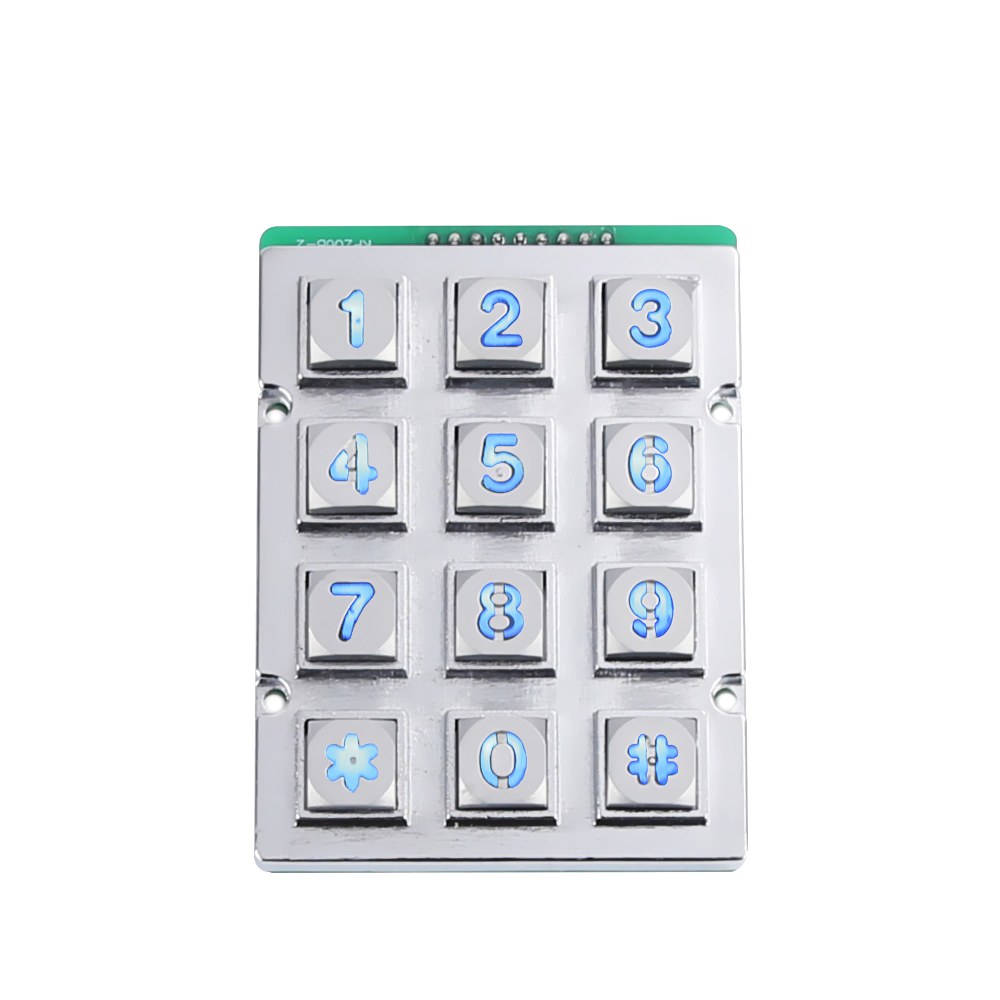
Rugged environments demand vandal-proof, IP-rated construction as a non-negotiable baseline. Custom metal keypads built from stainless steel or zinc alloy hold up against impact, tampering, and repeated abuse in ways plastic housings simply can’t match. That’s the starting point, not the finish line.
Get a Custom Metal Keypad Quote From Keypado
Why does layout customization matter for OEM panels?
A keypad only works if it fits the panel it’s built for. Custom 3×4 or 4×4 layouts, paired with interfaces like USB or matrix output, let engineers match input devices to existing control panel geometry without redesigning the enclosure around the component.
Sealing matters just as much as layout. Housings rated IP65 or higher block dust and water ingress, which keeps internal contacts and circuitry protected in washdown areas, outdoor kiosks, and dusty industrial floors.
How does the legend application method affect longevity?
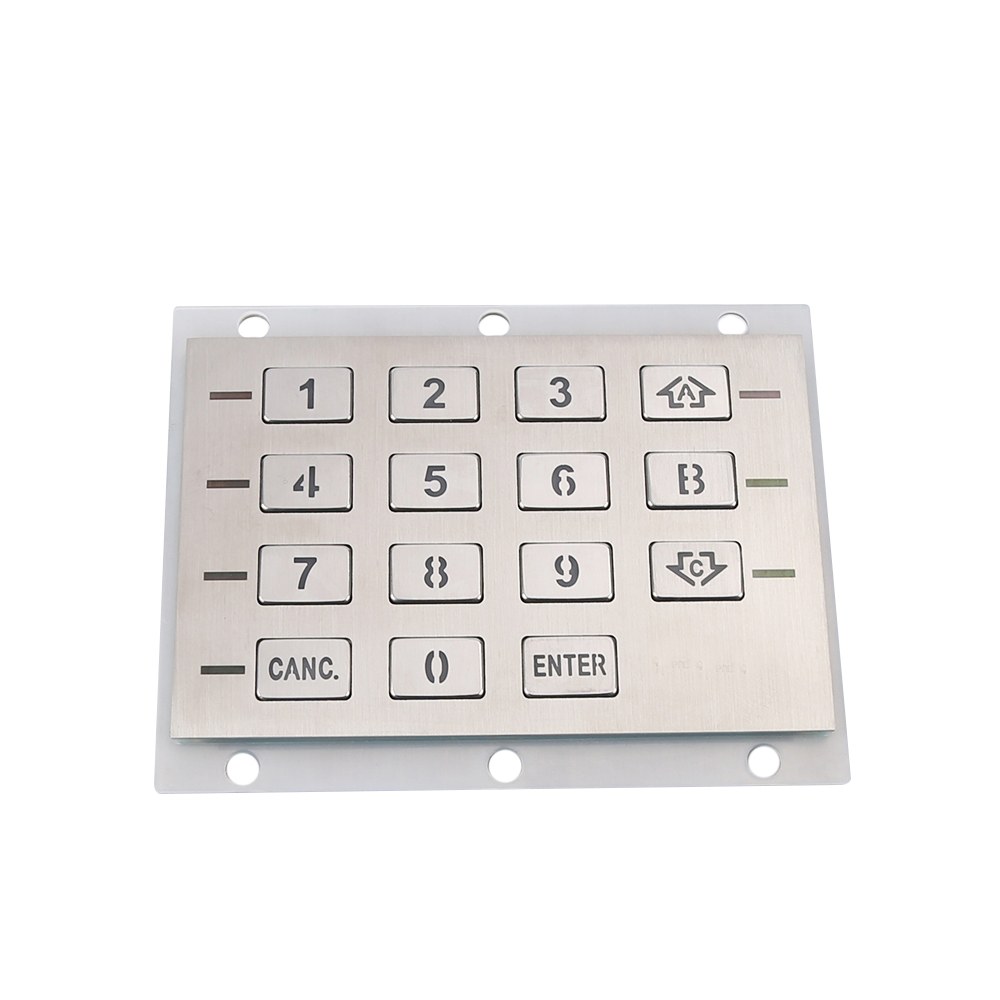
Marking technique determines whether characters stay legible after years of use. Laser engraving vs. screen printing represents the central decision: laser methods remove a top coating layer to expose a permanent mark, while screen printing applies ink on the surface, where it’s more exposed to wear.
How Does Laser Engraving Perform on Keypads?
Laser etching removes a thin layer of material to carve recessed characters directly into the keypad surface. This process creates markings immune to surface friction, unlike ink-based methods that sit on top of the material and wear away over time. For engineers weighing laser engraving vs. screen printing on a keypad specification sheet, the physical difference matters more than it might seem.
Recessed grooves don’t rely on surface ink to stay visible. After 100,000-plus actuations, laser-etched legends remain crisp and legible. The marking lives inside the material rather than on top of it. Screen-printed ink, by contrast, thins with every cycle a finger or gloved hand presses down.
Does laser etching hold up to cleaning chemicals?
Yes. Laser-etched legends resist aggressive cleaning agents like alcohol and bleach wipes, which is a big deal for keypads deployed in retail checkout lines, hospitals, or food service equipment. Tactile feedback stays intact too, so operators get the same button feel wipe after wipe. That combination makes laser etching the stronger candidate for high-traffic, high-hygiene environments.
Why does laser marking suit precision graphics?
Laser marking produces sharper, longer-lasting results than ink-based alternatives when the job calls for logos, barcodes, or measurement scales. The beam holds tight tolerances that screen printing struggles to match on small or detailed graphics.
For OEM teams specifying custom metal keypads destined for kiosks, access panels, or vending equipment, these performance traits translate into fewer field failures and less warranty exposure down the road.
What Are Screen Printing’s Strengths and Limits?
Colorful, graphic-heavy legends remain screen printing’s biggest strength. Decades of use in industrial marking prove this method’s reliability for producing bold multi-color designs on keypad surfaces. Procurement teams weighing laser engraving vs. screen printing for a new OEM order should start by looking at what each process actually delivers on the production floor.
Get a Custom Metal Keypad Quote From Keypado
Screen printing shines when a design calls for rich color layering — think branded logos or multi-tone icon sets. But speed and cleanliness tell a different story. Laser marking runs faster and leaves less mess behind, since it skips the wet-ink stages that slow screen printing down. For OEMs running high-volume production, that time difference adds up fast across thousands of units.
Cost structure flips the equation somewhat. Screen printing equipment costs less upfront than laser marking gear. Yet that lower price tag hides a catch: screen printing demands more supplies. Inks, screens, solvents — and more hands-on labor to keep quality consistent batch after batch.
Does Screen Printing Work for Rugged Metal Keypads?
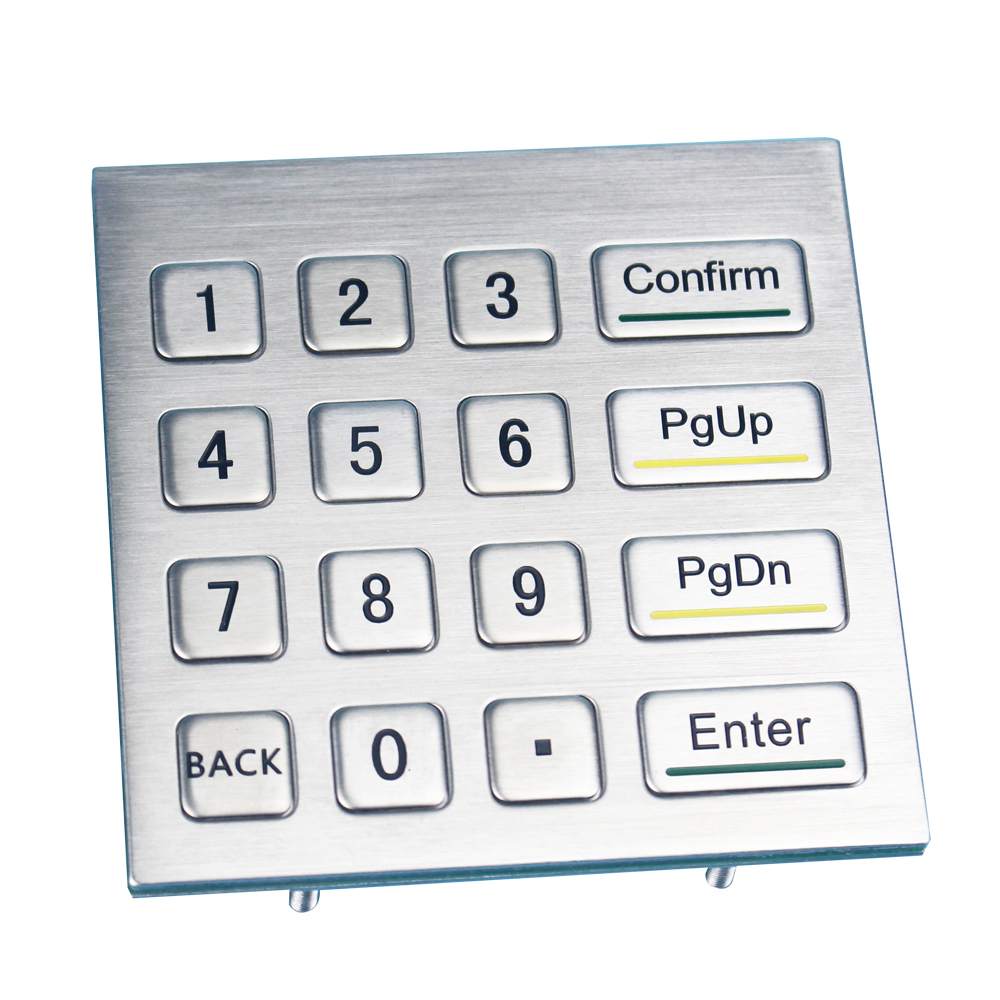
Screen printing struggles to match laser methods on rugged, high-cycle input devices. Suppliers building custom metal keypads for kiosks, lockers, and access panels typically favor engraving as part of the standard build package, alongside layout and interface customization. Engraved legends resist the abrasion and repeated actuation that harsh environments throw at input devices daily.
For color-rich, low-cycle applications, screen printing still earns its place. For rugged, high-actuation panels, engraving wins on durability.
Which Method Fits Custom Metal Keypads Best?
Durability decides the winner for most rugged OEM applications. Weighing laser engraving vs. screen printing for custom metal keypads comes down to one question: how many presses does the panel need to survive? Vandal-proof metal keys built with laser engraving hold up through millions of presses, keeping legends crisp long after screen-printed ink would fade or chip.
Screen printing still has a place in the design toolkit. Short prototype runs, budget-sensitive projects, or applications needing bold multi-color graphics sometimes favor screen printing’s lower setup cost. But for equipment facing constant field use — access panels, fuel dispensers, kiosks. Laser engraving’s resistance to abrasion and chemical exposure makes it the safer long-term bet.
Does engraving cost more upfront than printing?
Setup costs run slightly higher for engraving, but that gap narrows quickly once cycle life enters the picture. Factory-direct engineering support, including free CAD review and customization, helps OEM teams right-size the process without paying intermediary markups.
How fast can engineers get working samples?
Low MOQ sampling with a fast 7-day turnaround lets procurement teams test engraved layouts before committing to full production. Every custom design ships backed by ISO9001 certification. Batch inspection reports, giving engineers documented proof of consistency before scaling volume.
Which Marking Method Should You Choose?
Durability under heavy actuation favors laser marking, while color-rich, low-volume designs favor screen printing. The right pick depends on how many cycles the keypad faces and how the design looks over time. Choosing wrong costs more than money. Faded legends on a control panel lead to misreads, downtime, and costly field returns.
Laser engraving vs. screen printing breaks down clearly once actuation counts and finish requirements enter the picture.
Get a Custom Metal Keypad Quote From Keypado
Does marking method affect keypad lifespan in OEM deployments?
Marking choice directly shapes how long legends stay legible under real-world use. Keypado’s custom metal keypads get proven in deployments exceeding 100,000 units, a scale where surface wear becomes obvious fast.
Which manufacturing partner supports either method reliably?
Operating factory-direct from Yuyao, Zhejiang, China, Keypado supports both marking approaches with fast sampling, low minimum order quantities, and on-time delivery. Over 200 clients worldwide rely on that combination for pilot runs and full production alike.
So here’s the thing: choosing between laser engraving and screen printing comes down to what your equipment actually needs. Both methods deliver durability and clarity on metal keypads, but they shine in different situations. Laser engraving handles intricate details and small batches beautifully, while screen printing excels when you’re scaling up production. The best choice? It’s the one that matches your timeline, budget, and design complexity. That’s where working with an experienced partner really pays off—they’ll help you pick the right technique. Your keypads perform flawlessly in the field.
FAQ
Why does laser engraving outlast screen printing on metal keypads?
Laser engraving penetrates the metal surface itself, creating recessed marks that resist fading, chemical exposure, and abrasion. Screen printing sits on top of the surface, making ink prone to wearing away in harsh environments.
What sealing rating should rugged metal keypads have?
Housings rated IP65 or higher block dust and water ingress, protecting internal contacts and circuitry in washdown areas, outdoor kiosks, and dusty industrial floors.
How do laser-etched legends hold up after heavy use?
After 100,000-plus actuations, laser-etched legends remain crisp and legible since the marking lives inside the material rather than on top, unlike screen-printed ink that thins with repeated presses.
 English
  Deutsch
  Français
  Polski
  Português do Brasil
  Español
  日本語
日本語  Русский
  العربية
  Italiano
  Nederlands
  Türkçe
  한국어
한국어