
Pricing for industrial metal keypads varies by configuration, interface, and order volume — no universal figure applies. Keypado offers factory-direct custom quotes based on layout, engraving, backlighting, and IP-rating requirements. With low minimum order quantities and support from over 200 clients worldwide, OEMs receive competitive pricing without intermediary markups.
Why Does Industrial Metal Keypad Cost Vary So Much?
Metal keypad cost varies because industrial-grade input devices demand materials, engineering, and sealing standards that standard keypads simply don’t require. Skipping those upgrades means equipment fails faster in harsh environments — and replacement costs dwarf the original price difference.
Get a Custom Metal Keypad Quote From Keypado
What Materials Drive the Price Up?
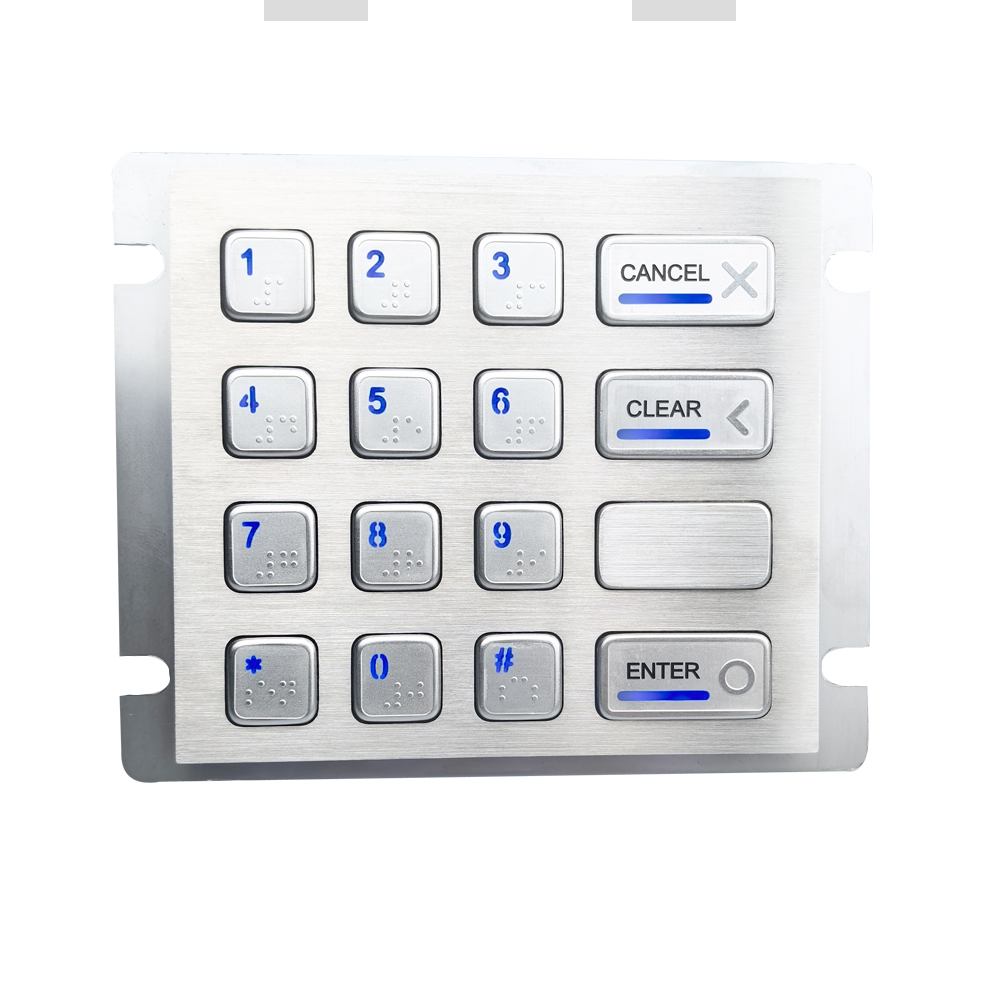
Metal keypads built from stainless steel or zinc alloy cost more per unit than plastic alternatives. Both materials deliver the structural strength needed for vandal-proof, IP-rated durability in demanding deployments like kiosks, lockers, and fuel dispensers. The raw material alone shifts the cost baseline before a single engineering decision is made.
Which Keypad Technology Costs the Most?
Technology choice is one of the biggest pricing variables. Each of the three main metal keypad technologies carries a different cost profile:
Mechanical keypads use a classic dome-membrane design that provides clear tactile feedback. Capacitive keypads add a sensing layer beneath the metal surface. Piezo keypads sit at the top of the durability spectrum — fully sealed with no moving parts. Which pushes their engineering and material costs higher than the other two options.
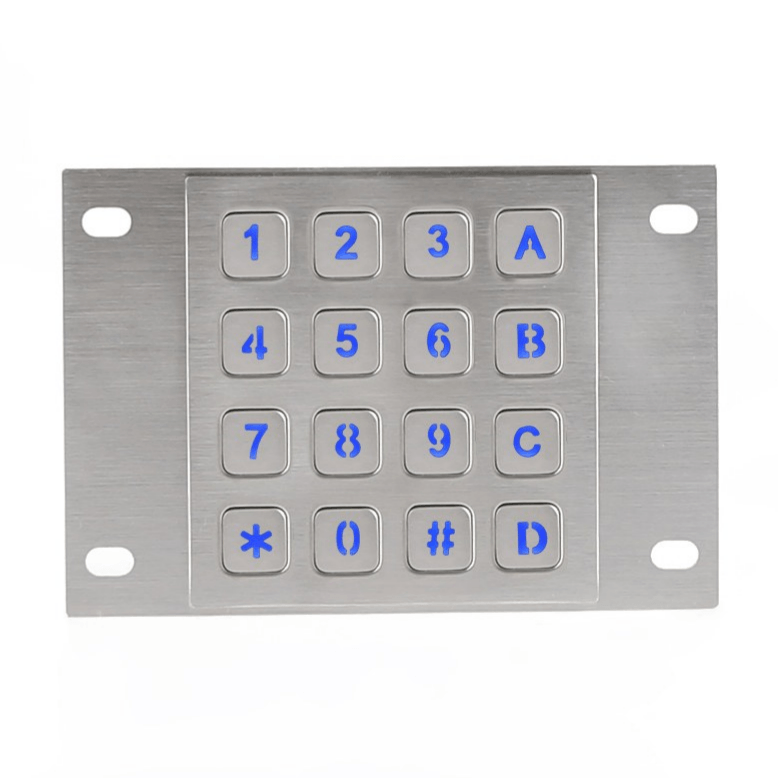
Beyond technology, customization layers on additional cost. Custom layouts, interface options, engraving, and backlighting each require engineering time and tooling. OEMs sourcing factory-direct — as Keypado’s clients do — avoid intermediary markups. Keeps the final price closer to actual production cost.
What Specific Features Drive the Price Up?
Metal keypad cost climbs when OEMs add configuration layers beyond a basic numeric layout. Each customization — from sealed enclosures to compliance certifications — introduces additional engineering work, materials, and testing that manufacturers build into the unit price.
Here’s a quick look at the main cost drivers:
Custom layouts and engraving — Non-standard key arrangements and laser-engraved legends require dedicated tooling and setup time.
Backlighting — Adding illumination means integrating LED components and additional wiring into the keypad assembly.
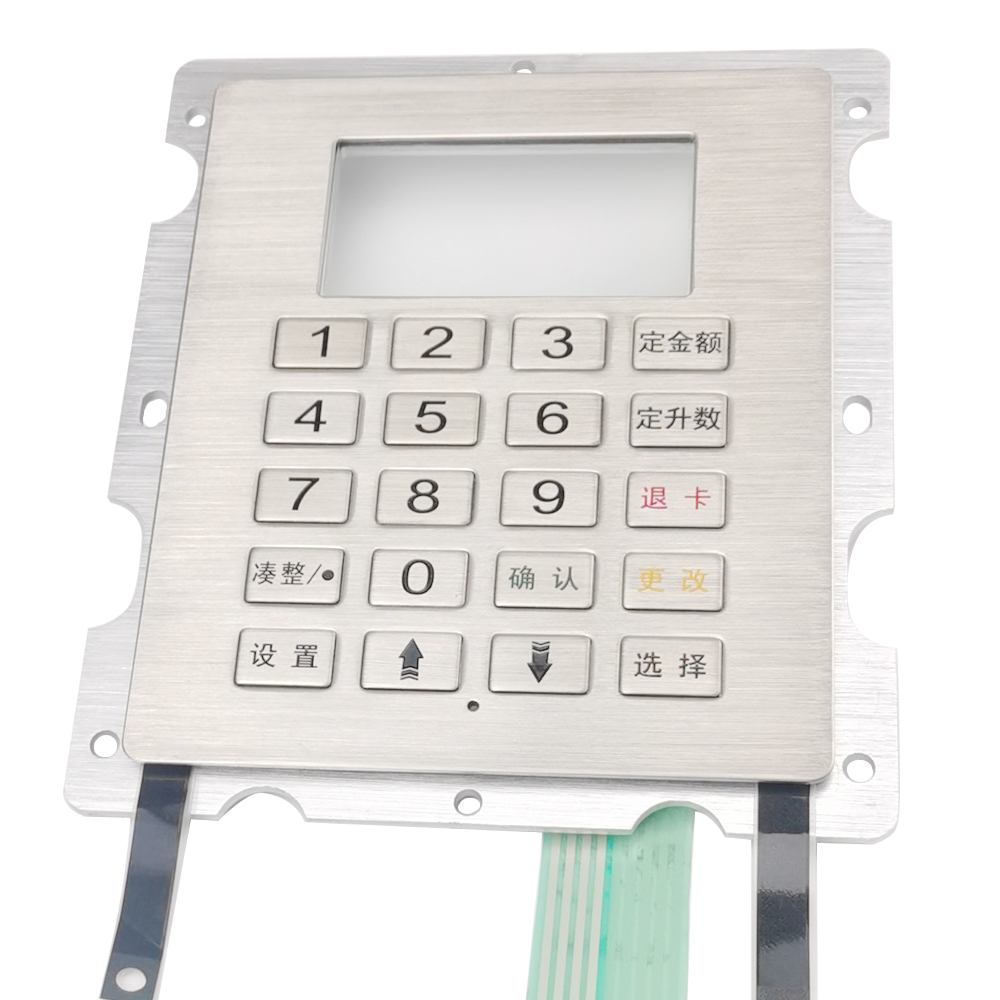
Interface selection — Choosing between USB, matrix, or PS/2 outputs affects the complexity of the internal controller and integration testing.
IP-rated sealing — Achieving dust-proof and waterproof protection demands precision gaskets, sealed housings, and rigorous ingress testing.
Compliance certifications — Meeting CE, FCC, and RoHS standards requires third-party testing and documentation, costs that flow directly into the unit price.
Does the interface type really affect pricing?
Interface choice is a surprisingly significant cost variable. A simple matrix output is straightforward to implement, while USB or PS/2 integration adds controller complexity and compatibility testing. OEMs specifying multiple interface options on a single unit see the largest impact.
How much does IP-rated sealing add to manufacturing complexity?
Sealing a metal keypad to IP65 or higher is not a minor upgrade. Manufacturers must engineer precise gasket fits, validate the enclosure against water and dust ingress under controlled conditions. Document results for quality records. That process adds measurable time and material cost compared to an unsealed unit. Vandal-resistant construction paired with full environmental sealing represents the highest-complexity — and highest-cost — configuration available.
How Does Order Volume Affect Your Per-Unit Cost?
Order volume is one of the biggest levers in metal keypad cost calculations. Larger production runs spread fixed tooling and setup costs across more units. Drives the per-unit price down — but that doesn’t mean small orders are a dead end.
Keypado’s production model is built around flexibility. Low minimum order quantities let OEMs run pilot batches without locking into large upfront commitments that strain budgets before a product even ships. That’s a meaningful advantage when a design is still being validated.
Get a Custom Metal Keypad Quote From Keypado
Can OEMs Test a Design Before Committing to High Volumes?
Keypado supports low minimum order quantities and short lead times. Samples can turn around in as little as 7 days. This lets OEM engineering teams confirm fit, finish, and interface compatibility before scaling production. Catching a layout issue at the pilot stage costs far less than discovering it after a full production run.
Does the Cost Model Hold Up at Scale?
Keypado’s products have been proven in deployments exceeding 100,000 units. Demonstrates that the pricing structure scales reliably as volumes grow. OEMs aren’t trading quality for cost efficiency at higher quantities. The same rugged metal construction and ISO-certified quality control apply across every batch size.
Here’s a quick look at how volume shapes the buying decision:
The takeaway for OEM procurement teams: starting small doesn’t mean paying a permanent premium. Keypado’s model is designed to grow alongside a product’s lifecycle.
Does Buying Factory-Direct Actually Save You Money?
Factory-direct purchasing eliminates the distributor and reseller layers that typically inflate metal keypad cost well beyond the base manufacturing price. Keypado operates as a factory-direct manufacturer, which means OEM clients pay for the product itself. Not for the margins stacked on top by middlemen.
The savings run deeper than the unit price alone. Keypado includes free CAD review and engineering customization as part of its standard factory-direct model. Design support that OEMs often pay separately for — sometimes at significant cost — comes bundled in from the start. That’s a real reduction in hidden project expenses before a single unit ships.
What Hidden Costs Does Factory-Direct Actually Remove?
The most overlooked savings come from engineering and development overhead. Keypado’s OEM/ODM support is built to shorten development timelines and strengthen field reliability. Lowers total cost of ownership beyond what any unit-price comparison captures. Fewer revision cycles, faster sampling, and fewer field failures all translate directly into budget savings over a product’s lifetime.
How Do OEMs Know This Model Works at Scale?
Keypado’s factory-direct approach is trusted by more than 200 clients across more than 30 countries. That global footprint signals a cost model that holds up under real-world procurement conditions — not just on paper.
Here’s a quick breakdown of where factory-direct purchasing saves money:
Unit price: No distributor markup added to base manufacturing cost
Design fees: Free CAD review and customization included
Development time: OEM/ODM support reduces iteration cycles
Field reliability: Rugged metal construction lowers long-term replacement costs
Short answer? Yes — factory-direct purchasing saves money at multiple stages, not just at checkout.
How Do You Get the Best Value for Your Budget?
Getting the best value from metal keypad cost starts with looking beyond the purchase price. OEMs that focus only on upfront unit cost often absorb far higher expenses down the line. Through field failures, replacement cycles, and delayed product launches.
Get a Custom Metal Keypad Quote From Keypado
Does Certification Actually Protect the Bottom Line?
Keypado’s ISO9001 certification gives OEM clients a documented quality baseline before products ever reach the field. That matters because undetected defects discovered after deployment cost significantly more to fix than defects caught during production. Quality assurance at the manufacturing stage protects OEMs from the kind of costly field failures that erode margins and damage customer relationships.
How Does Durability Affect Long-Term Spending?
Vandal-proof metal keys rated for millions of presses dramatically reduce replacement and maintenance costs over the life of a deployment. A keypad that holds up in a high-traffic kiosk or fuel dispenser doesn’t need frequent servicing. That durability translates directly into lower total cost of ownership — which is where the real savings show up.
Here’s a quick look at where value is actually built:
Keypado’s streamlined, low-volume production model accelerates time to market. Means OEM clients avoid the indirect costs that pile up when product launches slip. Faster sampling and shorter lead times keep projects on schedule — and on budget.
So here’s the thing — industrial metal keypad pricing isn’t one-size-fits-all, and that’s actually a strength. Your costs depend on what you’re building, how many units you need, and which features matter most for your application. The real win? Working directly with a manufacturer who understands your specific requirements means you’re not paying for unnecessary bells and whistles. That’s where smart OEMs find their sweet spot between quality and value.
FAQ
How much does an industrial metal keypad cost?
Pricing varies by configuration, interface, and order volume; contact Keypado for a custom quote.
Where does Keypado manufacture its industrial metal keypads?
Keypado manufactures industrial metal keypads in Yuyao, Zhejiang, China, supplying OEM clients factory-direct without intermediary markups.
Which metal keypad technology costs the most?
Piezo keypads sit at the top of the cost spectrum due to their fully sealed, no-moving-parts construction and higher material specifications.
 English
  Deutsch
  Français
  Polski
  Português do Brasil
  Español
  日本語
日本語  Русский
  العربية
  Italiano
  Nederlands
  Türkçe
  한국어
한국어