
Metal keypad prototypes are pre-production samples that let OEM clients validate layout, interface, and durability before committing to full runs. Skipping this step risks costly redesigns after tooling is locked. Keypado supports fast sampling with low minimum order quantities, helping teams confirm real-world performance across demanding environments like access control, vending, and fuel dispensers.
Key Takeaways
Metal keypads use stainless steel domes to complete electrical circuits when keys are pressed.
Dome switch keypads deliver reliability and durability in harsh industrial and commercial environments.
Keypado, located in Yuyao, Zhejiang, China, manufactures metal keypad prototypes for commercial applications.
Metal keypads provide stronger security features and clearer interfaces than standard keyboard alternatives.
What exactly is a metal keypad prototype?
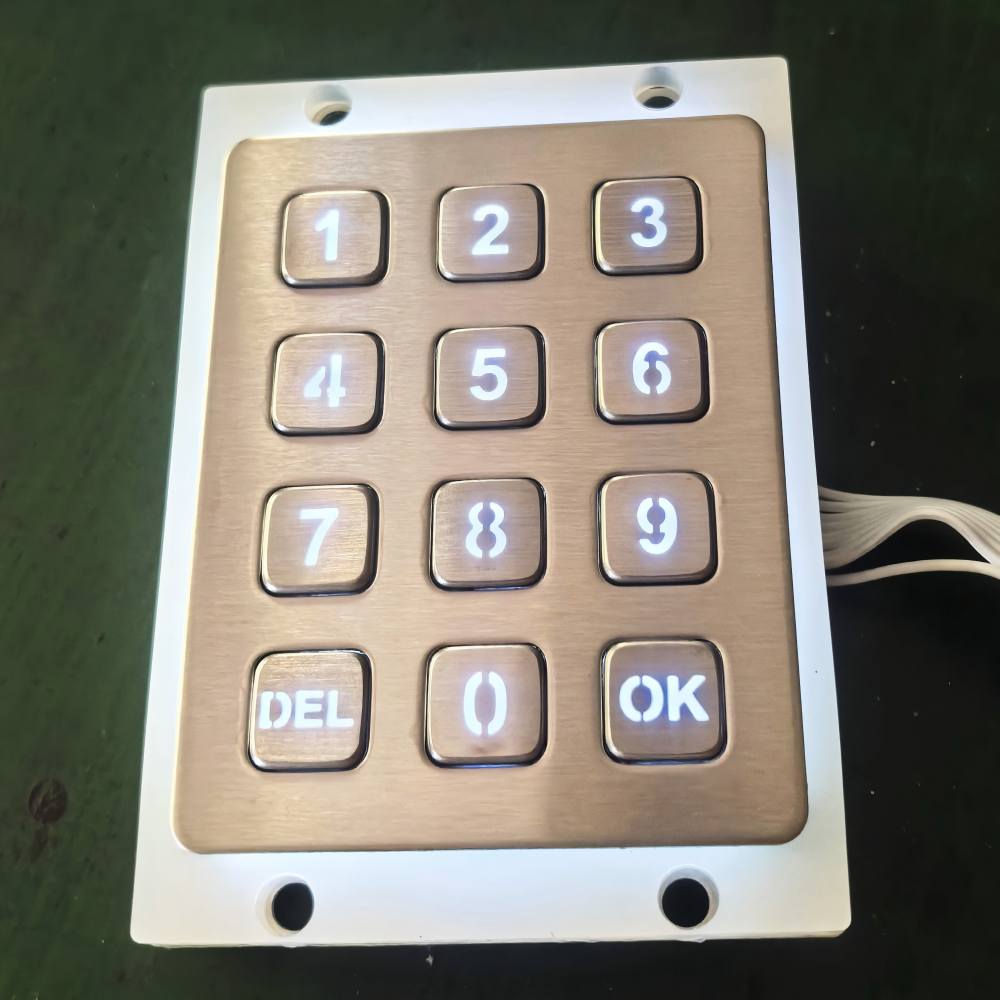
A metal keypad prototype is a pre-production sample built from real materials — typically stainless steel or zinc alloy. That lets OEM engineers validate layout, interface connections, and durability before committing to a full production run. Metal keypad prototypes exist to catch problems early, when fixing them is cheap and fast.
Think of a prototype as a dress rehearsal. The goal isn’t a finished product. It’s a working model close enough to the final design that real-world testing actually means something.
Get a Custom Metal Keypad Quote From Keypado
Why does a physical prototype matter for metal keypads?
Metal keypads are built for demanding environments where reliability isn’t optional. Industrial and commercial settings expose input devices to heavy use, moisture, and mechanical stress. A digital render or a plastic mock-up simply can’t replicate how a stainless steel or zinc alloy unit performs under those conditions. A physical prototype surfaces fit issues, actuation feel, and interface compatibility before a single production unit ships.
What should OEMs look for in a prototype process?
A solid prototype process covers three things:
Layout validation — confirming key spacing, legends, and mounting dimensions match the target enclosure
Interface testing — verifying USB, matrix, or PS/2 connections behave correctly with the host system
Durability assessment — stress-testing the metal construction against the environmental conditions the finished device will face
Speed matters here. Keypado supports fast sampling with low minimum order quantities. OEM teams get a working metal sample quickly without large upfront financial commitments. That combination of real-material construction and accessible sampling is what separates a genuinely useful prototype process from one that just adds lead time.
Why does skipping a prototype cost you more?
Skipping a metal keypad prototype turns small, fixable design flaws into large, expensive field failures. Design problems that surface after mass deployment cost far more to correct than problems caught during a controlled sample build.
Three failure modes account for most premature keypad breakdowns in the field:
External contamination entering the switch cavity
Internal contamination forming inside the switch cavity
Exceeding the switch contact point electrical ratings
Each of these issues is detectable during prototype testing. Miss them at that stage, and they ship into production.
What happens when a design flaw reaches mass production?
Keypado’s OEM/ODM support is built specifically to catch design problems early, cutting development time. Improving field reliability before a single production unit ships. When a flaw slips past the prototype stage, it doesn’t affect a handful of devices. It can ripple across deployments proven at the scale of 100,000+ units. Reworking or replacing hardware at that volume is a serious cost, both financially and in project timeline.
Why is prototype testing especially important for rugged metal keypads?
Metal keypads operate in demanding environments — think fuel dispensers, access control panels. Outdoor kiosks — where contamination and electrical stress are constant realities. A prototype exposes how a specific layout, interface, and enclosure design holds up against those real-world conditions. Discovering a sealing gap or an undersized contact rating on a sample of a few units is manageable. Discovering the same problem across a large OEM deployment is not.
The prototype stage is where reliability gets built in, not bolted on afterward.
What should your metal keypad prototype include?
A strong metal keypad prototype validates four core elements before production tooling is ever finalized: physical layout, interface compatibility, environmental sealing, and material construction. Skipping any one of these at the prototype stage forces costly rework later. And in OEM deployments, late-stage changes ripple across panel designs, firmware, and field timelines.
What layout and interface details need confirming at the prototype stage?
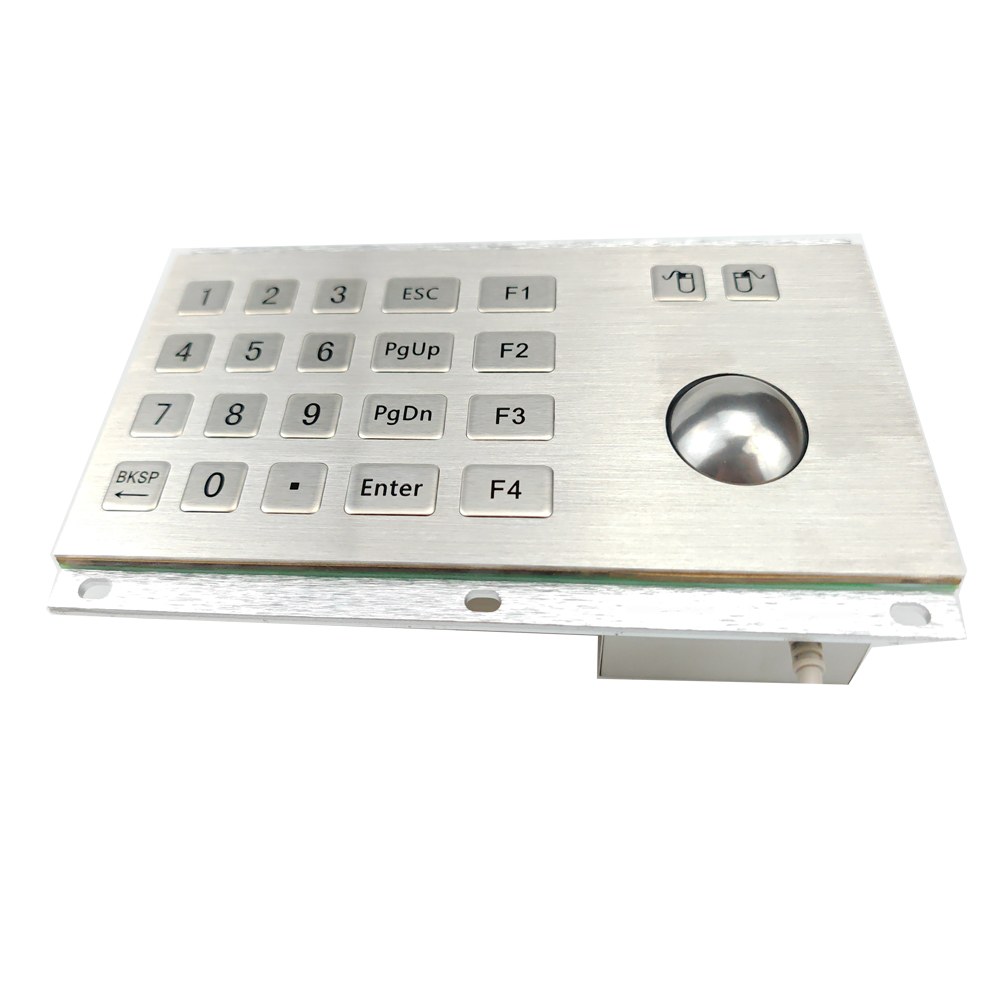
Key arrangement is the first thing to lock down. Whether the design calls for a 3×4 or 4×4 grid, the prototype confirms that the layout fits the target panel cutout before tooling costs are committed. Interface compatibility is equally critical — USB, matrix, and PS/2 outputs each interact differently with downstream controllers. A prototype run surfaces any integration mismatches early, when fixes are still cheap.
Does a prototype need to meet IP ratings?
For any outdoor or industrial deployment, yes. IP-rated sealing against dust and water ingress should be tested on the prototype itself, not assumed from a spec sheet. Environments like fuel dispensers, access control panels, and outdoor kiosks expose keypads to moisture and particulates daily. A prototype that passes sealing verification gives OEM engineers confidence the production units will hold up in the field.
Beyond sealing, material selection shapes long-term durability. Stainless steel resists corrosion and surface wear under heavy use. Zinc alloy offers a balance of strength and formability for more complex housing geometries. Both materials handle weather exposure well, making the choice between them a function of the specific deployment environment rather than a default decision.
Getting all four elements right on the prototype means production runs start from a validated baseline. Not a hopeful assumption.
How does Keypado’s sampling process actually work?
Keypado’s sampling process moves OEMs from design brief to physical metal keypad prototype in as little as 7 days, with low minimum order quantities that keep early-stage risk small. Factory-direct engineering support removes the intermediary markups that typically slow down and inflate the cost of prototype iteration.
Get a Custom Metal Keypad Quote From Keypado
Here’s what the process looks like in practice:
Submit a design brief — OEMs share layout requirements, interface specs, and mounting preferences
Free CAD review — Keypado’s engineering team reviews and refines the design at no extra charge
Sample production — Physical prototypes ship within a 7-day turnaround window
Batch inspection — Every sample run is backed by ISO9001-certified quality control and inspection reports
What makes Keypado’s turnaround so fast?
The factory-direct model is the key. Because no intermediary sits between the OEM and the engineering team, design feedback loops are short. Changes get actioned quickly, and clients receive a production-ready prototype without the back-and-forth delays that third-party distributors introduce.
Does prototype quality match full production quality?
It does. ISO9001 certification and batch inspection reports apply to every run — not just high-volume orders. The quality validated at the prototype stage carries directly into full-scale manufacturing. OEMs aren’t surprised by performance gaps when they scale up. That consistency is a big reason Keypado has built trust with more than 200 clients across more than 30 countries. A proven prototype-to-production pipeline at that global scale isn’t accidental. It’s the result of disciplined quality control baked into every step of the process.
Which industries benefit most from metal keypad prototypes?
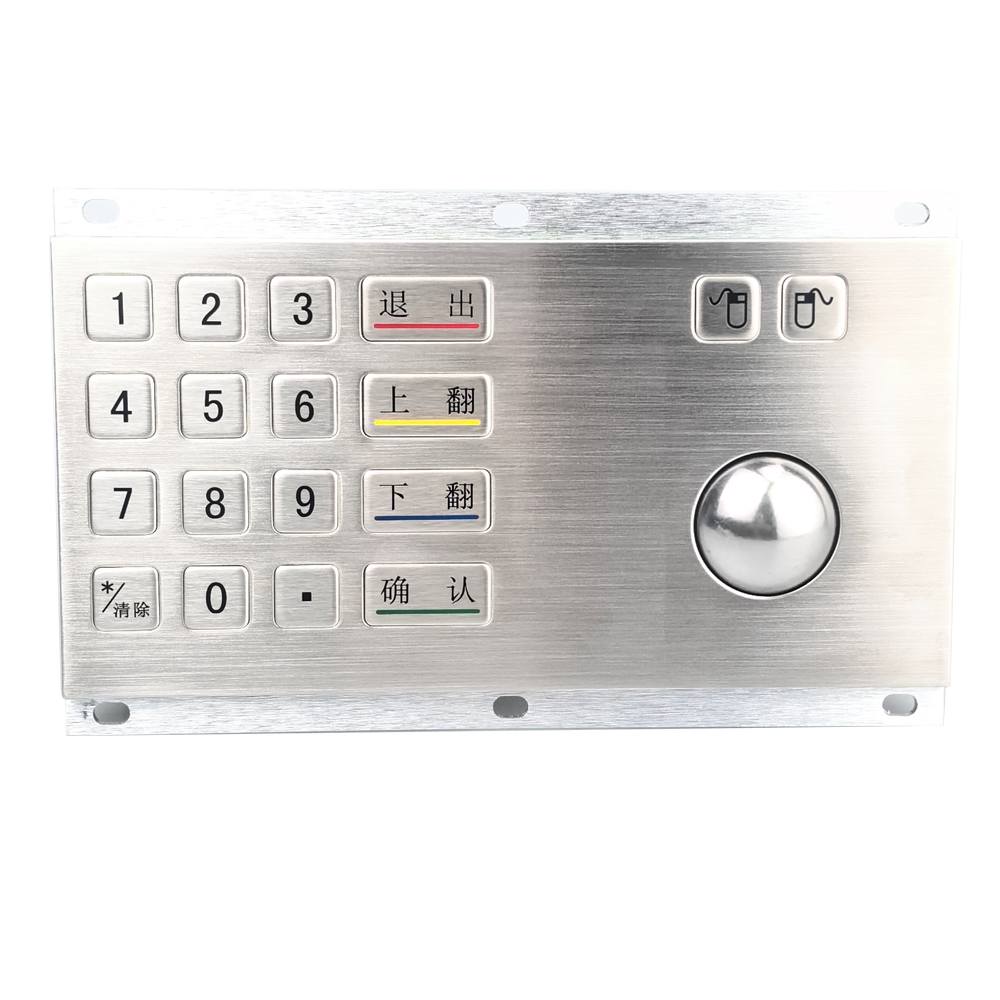
Industries that deploy equipment in high-traffic or harsh environments gain the most from metal keypad prototype validation. Access control systems, lockers, vending machines, fuel dispensers, ticketing terminals, self-service kiosks. Industrial control panels all depend on metal keypads that must be thoroughly tested before full-scale production begins.
The stakes are real. Skipping prototype validation means deploying untested hardware into environments where failure is costly and repairs are disruptive. A prototype catches layout mismatches, interface issues, and durability gaps before a single production unit ships.
Get a Custom Metal Keypad Quote From Keypado
Why does prototype testing matter for high-traffic public environments?
Vandal-proof metal keys are rated to endure millions of presses. But that performance claim only holds when the design has been stress-tested at the prototype stage. Public-facing equipment like kiosks and fuel dispensers sees relentless daily use. A keypad that hasn’t been validated under realistic load conditions risks early failure in the field.
Which application types demand the longest service life from a keypad?
Metal keypads support long service life and many cycles of operation without losing function. That durability is exactly what makes prototype validation non-negotiable for applications like industrial control panels and access control systems. Downtime carries serious operational consequences.
Here’s a quick look at how industry needs map to prototype priorities:
So here’s the thing: a metal keypad prototype isn’t just a nice-to-have—it’s your bridge between concept and confidence. It lets you test durability, validate your design, and catch issues before full production rolls out. When you’re building equipment that needs to survive real-world punishment, getting this step right saves you headaches, time. Money down the road. That’s why prototyping matters.
FAQ
What is a metal keypad prototype?
A metal keypad prototype is a pre-production sample built from real materials — typically stainless steel or zinc alloy. That lets OEM engineers validate layout, interface connections, and durability before committing to a full production run.
Why does skipping a prototype cost more?
Design problems that surface after mass deployment cost far more to correct than problems caught during a controlled sample build, turning small fixable flaws into large expensive field failures.
Where does Keypado manufacture metal keypad prototypes?
Keypado is located in Yuyao, Zhejiang, China. Supports fast sampling with low minimum order quantities. OEM teams get a working metal sample quickly without large upfront financial commitments.
 English
  Deutsch
  Français
  Polski
  Português do Brasil
  Español
  日本語
日本語  Русский
  العربية
  Italiano
  Nederlands
  Türkçe
  한국어
한국어